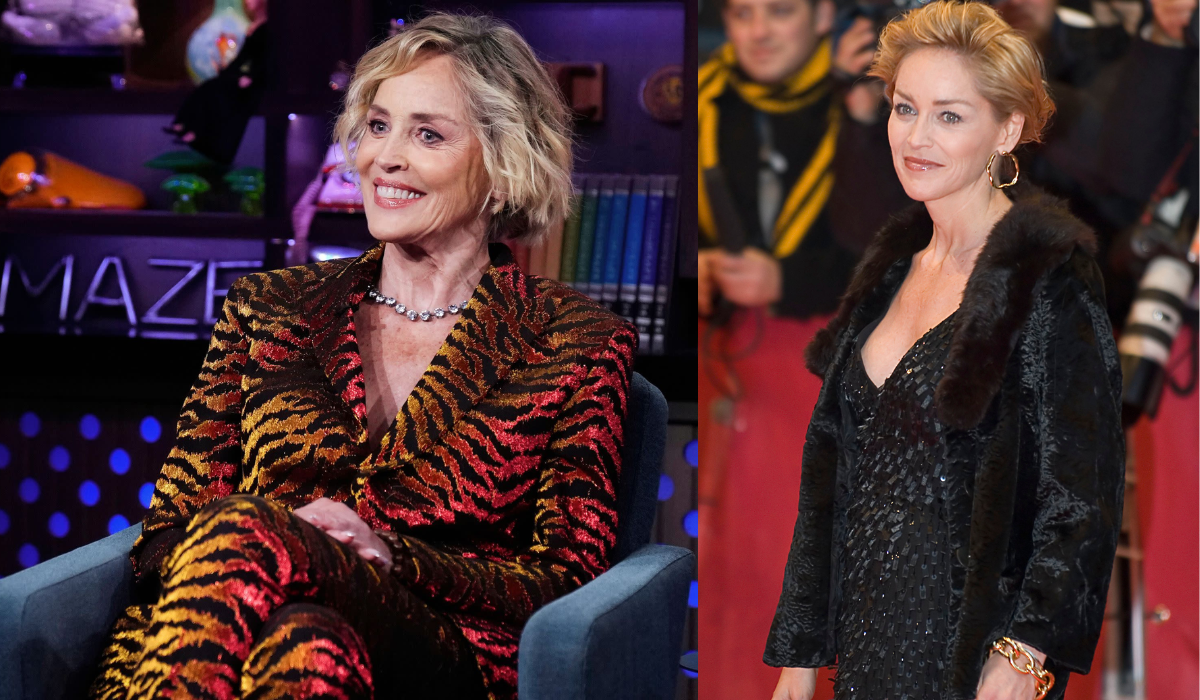
The story of Sharon Stone early life and career begins in the quiet, industrious town of Meadville, Pennsylvania. Born on March 10, 1958, Sharon Vonne Stone was the second of four children born to Joseph William Stone II, a tool and die manufacturer, and Dorothy Marie Stone, an accountant and homemaker. Her upbringing was rooted in the blue-collar values of the American Midwest, where hard work was expected and academic excellence was encouraged. Despite the later glamour associated with her name, Stone often describes her childhood as grounded and somewhat isolated, far removed from the bright lights of Los Angeles or New York City.
Growing up in a household with three siblings—Michael, Kelly, and Patrick—Sharon was exposed to a family dynamic that valued intellectual growth. Her parents, particularly her father, were instrumental in fostering a sense of independence and feminist ideals in her from a young age. He famously told her that she should never feel limited by her gender, a sentiment that would later fuel her tenacity in the male-dominated film industry. These early years in Meadville provided the psychological foundation for a woman who would eventually refuse to be “just another pretty face” in Hollywood’s competitive landscape.
Sharon Stone: Quick Biography & Facts
| Full Name | Sharon Vonne Stone |
| Date of Birth | March 10, 1958 |
| Place of Birth | Meadville, Pennsylvania, U.S. |
| Nationality | American |
| Reported IQ | 154 (Child Prodigy / Genius Level) |
| Education | Saegertown High School; Edinboro University of Pennsylvania |
| Height | 5′ 8″ (173 cm) |
| Profession | Actress, Producer, Former Fashion Model, Painter |
| Years Active | 1980–Present |
| Breakthrough Film | Total Recall (1990) |
| Most Famous Role | Catherine Tramell in Basic Instinct (1992) |
| Major Awards | Golden Globe Award (1996), Primetime Emmy Award (2004) |
| Oscar Nominations | Best Actress for Casino (1995) |
| Spouses | Michael Greenburg (m. 1984–1990); Phil Bronstein (m. 1998–2004) |
| Children | 3 (Roan Joseph, Laird Vonne, Quinn Kelly) |
| Philanthropy | Global Campaign Chair for AMFAR (AIDS Research) |
A Child Prodigy with a 154 IQ
Long before she was a household name, Sharon Stone was recognized for her extraordinary intellectual capacity. A defining feature of Sharon Stone early life and career is her reported IQ of 154, placing her in the top 0.1% of the population. This brilliance manifested early; she reportedly walked and talked at just ten months old. By the time she was five, her teachers realized she was far ahead of her peers, and she was moved directly into the second grade. This academic acceleration often left her feeling like an outsider, a “nerdy, ugly duckling” who preferred the company of books to the social hierarchies of the playground.
Stone’s intelligence was not just a fun fact; it was the engine of her early ambitions. She attended Saegertown High School, where she excelled in her studies, graduating in 1975 at the age of 17. However, her academic journey had already taken a sophisticated turn even before she received her diploma. Because of her advanced standing, she had begun taking college-level courses at Edinboro University of Pennsylvania when she was only 15 years old. She studied creative writing and fine arts, showcasing a creative spirit that complimented her logical mind. This dual nature—intellectual rigor paired with artistic curiosity—would eventually define her approach to acting.
Beauty Pageants as a Gateway to Opportunity
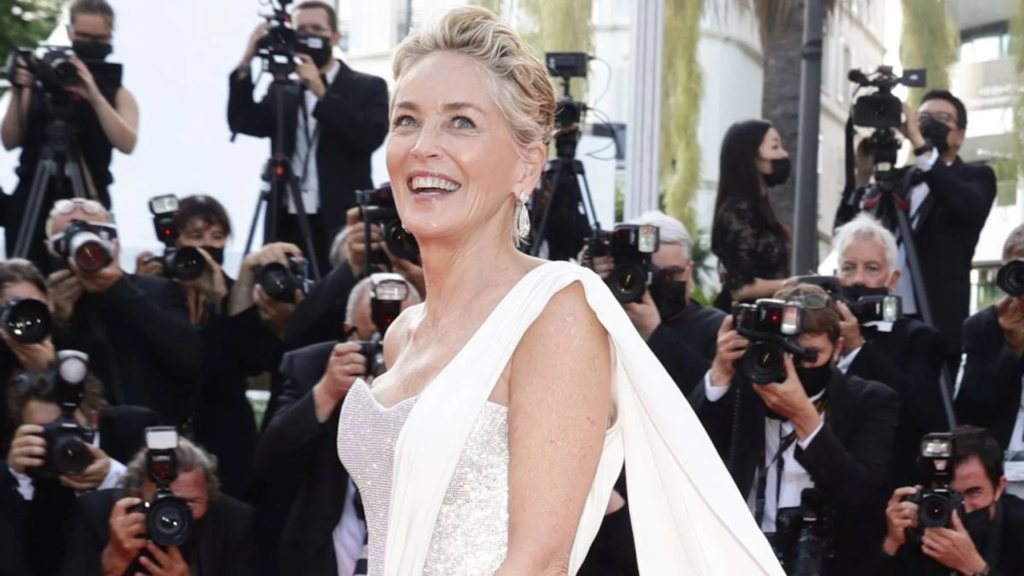
While she was deeply committed to her education, the mid-1970s saw a shift in how the world perceived Sharon Stone. Despite her self-description as an awkward teenager, her striking features began to garner attention. In a move that surprised many who knew her as a bookworm, she entered the Miss Crawford County beauty pageant. This wasn’t merely a quest for validation; for Stone, pageantry was a pragmatic means to an end. It offered scholarship money and a platform that could potentially lead her out of Meadville. She won the title, and the victory served as a catalyst for her next major life change.
The pageant win led to her competing in the Miss Pennsylvania contest. Although she didn’t take the top crown, a judge at the event gave her a piece of advice that would alter the trajectory of Sharon Stone early life and career. He told her that she should leave school and move to New York City to become a fashion model. Encouraged by her mother, who saw the potential for a larger life for her daughter, Stone decided to take the leap. She moved in with an aunt in New Jersey and, within four days of arriving in the New York area, she signed a contract with the prestigious Ford Modeling Agency.
The High-Fashion Transition in New York and Paris
The late 1970s marked Sharon Stone’s emergence as a top-tier international model. After signing with Eileen Ford, she quickly became a fixture in commercial and print advertisements. Her classic blonde beauty and statuesque frame made her a natural fit for brands like Maybelline, Clairol, and Burger King. One of her most recognizable early credits was her appearance in the Charlie perfume advertisements, which captured the spirited, independent “Charlie girl” archetype of the era. This period of her life was a whirlwind of travel and high-stakes photography, taking her from the studios of Manhattan to the runways of Milan and Paris.
Living in Europe for a year proved to be a transformative experience. It refined her aesthetic and gave her a global perspective that many young American actresses lacked. However, despite her success in modeling, Stone felt unfulfilled. She viewed modeling as a “silent” profession and longed for a medium where she could use her voice and her intellect. During a stay in Paris, she realized that her true calling was acting. She famously decided to pack her bags, return to New York, and literally stand in line to be an extra in a film, signaling the end of her modeling chapter and the difficult start of her acting journey.
Early Cinema: Debuting with Woody Allen
The transition from modeling to acting is notoriously difficult, but Sharon Stone made her debut in a way that most aspiring actors only dream of. In 1980, she landed a non-speaking role in Woody Allen’s film “Stardust Memories.” Though her screen time was brief—she was the “pretty girl on the train” seen through a window—it was a symbolic entry into the world of cinema. The experience of working on a major set with an acclaimed director solidified her desire to pursue acting as a serious craft. She was no longer just a face on a billboard; she was a participant in the art of storytelling.
However, the “Stardust Memories” role did not lead to instant fame. Stone spent the early 1980s grinding through the typical challenges of a budding actress. She took acting classes, went on countless auditions, and dealt with the typecasting that often follows former models. In 1981, she secured her first speaking role in the Wes Craven horror film “Deadly Blessing.” While the film wasn’t a critical darling, it allowed her to showcase her screen presence and ability to handle dialogue. This period was essential for her development, as it taught her the technical aspects of film acting and the resilience needed to survive in a fickle industry.
Navigating the 1980s: The Struggle for Stardom
The decade of the 1980s was a period of “near misses” and moderate success for Sharon Stone. She worked consistently, appearing in a variety of television shows and feature films, but the “breakthrough” role remained elusive. She guest-starred on popular series such as “Magnum, P.I.,” “Remington Steele,” and “T.J. Hooker.” These roles kept her visible and financially stable, but they rarely challenged her intellectually or artistically. In 1984, she had a more substantial role in the comedy-drama “Irreconcilable Differences,” playing a starlet who comes between a married couple played by Ryan O’Neal and Shelley Long.
Despite her obvious talent, Stone often found herself cast in “B-movie” projects or roles that focused primarily on her looks. She starred in “King Solomon’s Mines” (1985) and its sequel “Allan Quatermain and the Lost City of Gold” (1986) alongside Richard Chamberlain. These action-adventure films were physically demanding and required her to perform many of her own stunts, yet they were often dismissed by critics as derivative of the Indiana Jones franchise. By the late 1980s, Stone had been in the business for nearly a decade, and while she was a working actress, she was still far from being an A-list star.
Total Recall (1990): The Turning Point
The dawn of the 1990s brought the pivotal shift in Sharon Stone early life and career that she had been working toward for years. In 1990, she was cast as Lori, the lethal wife of Arnold Schwarzenegger’s character in the sci-fi epic “Total Recall,” directed by Paul Verhoeven. This role was a game-changer because it required Stone to be both a convincing romantic interest and a formidable physical threat. Her training for the film was intense; she learned Tae Kwon Do and worked out relentlessly to hold her own in fight scenes against a world-class action star.
“Total Recall” was a massive box-office hit, and critics took notice of Stone’s performance. She managed to be both alluring and terrifying, a combination that Verhoeven would later exploit to even greater effect. To capitalize on the buzz generated by the film, Stone made the calculated decision to pose for Playboy magazine in 1990. She later explained that she did it to prove she was “sexy” and to shed the “bookworm” image that she felt was holding her back from leading roles. It worked; the pictorial became iconic and helped cement her image as a modern sex symbol, setting the stage for the role that would change her life forever.
The Cultural Phenomenon of Basic Instinct (1992)
If “Total Recall” opened the door, “Basic Instinct” (1992) blew it off the hinges. Reunited with director Paul Verhoeven, Stone took on the role of Catherine Tramell, a brilliant, bisexual novelist and murder suspect. The character was the ultimate “femme fatale”—intellectually superior, sexually liberated, and dangerously manipulative. Stone’s performance was nothing short of a revelation. She brought a cold, calculated intensity to the role that captivated audiences worldwide. The film’s infamous interrogation scene became a cultural touchstone, but it was Stone’s nuanced acting throughout the movie that earned her a Golden Globe nomination.
The success of “Basic Instinct” was unprecedented. It turned Sharon Stone into an international superstar overnight, a level of fame she had been chasing for twelve years. However, the fame came with its own set of challenges, including intense media scrutiny and controversies regarding the film’s explicit nature. Stone navigated this period with the same intelligence that had characterized her youth, using her platform to speak out on social issues and advocating for her own creative control. The film marked the official end of her “early career” and the beginning of her reign as one of the highest-paid and most influential women in Hollywood.
Personal Life and Resilience During the Rise
Behind the scenes of her rapid ascent, Stone’s personal life was also evolving. In 1984, she married television producer Michael Greenburg, but the marriage ended in divorce three years later. During the late 80s and early 90s, she faced the pressures of fame while trying to maintain her sanity in an industry that often treated women as disposable. Her resilience was tested not just by the professional “slump” of the 80s, but by the physical demands of her roles. She often spoke about the “glass ceiling” for women in Hollywood, using her newfound power to push for better roles and equal pay.
Her personal journey also included a deep commitment to philanthropy, which began to take shape during her rise to fame. Stone became a passionate advocate for AMFAR (The Foundation for AIDS Research), eventually becoming the organization’s Global Campaign Chair. This commitment to service, which she later attributed to her upbringing and her father’s influence, showed a side of her that the “femme fatale” roles often obscured. She proved that a woman could be a global sex symbol and a serious humanitarian simultaneously, breaking the narrow molds Hollywood tried to force her into.
The Intellectual Legacy of Sharon Stone
Reflecting on Sharon Stone early life and career, it is impossible to ignore the role her intellect played in her success. While Hollywood often marketed her based on her appearance, Stone used her “genius-level” IQ to navigate the business side of the industry. She became known for her sharp wit in interviews and her ability to out-think her contemporaries. She famously corrected the record regarding her Mensa membership, clarifying that while she was highly intelligent, the “Mensa” claim was an old piece of publicity that had been misinterpreted—a rare moment of candid honesty in a world of celebrity artifice.
Her intelligence also informed her choice of later roles, leading to her critically acclaimed performance in “Casino” (1995), for which she received an Academy Award nomination. By the mid-90s, Stone had successfully transitioned from a struggling actress to a respected artist. The foundation laid during her early life—the academic rigor at Edinboro, the discipline of modeling, and the tenacity of the “B-movie” years—all culminated in a career that has spanned over four decades. Sharon Stone didn’t just become a star; she engineered her own stardom through a combination of raw talent and strategic brilliance.
Conclusion:
The trajectory of Sharon Stone early life and career is a testament to the power of self-belief and intellectual curiosity. From the quiet streets of Meadville to the red carpets of Cannes, Stone’s path was never linear. She faced a decade of professional stagnation, typecasting, and personal challenges, yet she never lost sight of her potential. Her story reminds us that “overnight success” is often twelve years in the making, and that beauty is most potent when backed by a fierce, uncompromising mind. Today, she remains a symbol of resilience, proving that one can redefine themselves at any stage of life.
Frequently Asked Questions (FAQs)
1. What is Sharon Stone’s actual IQ?
Sharon Stone has a reported IQ of 154, which classifies her as a genius. This intellectual capacity led to her entering college at the young age of 15.
2. Where did Sharon Stone grow up?
She was born and raised in Meadville, Pennsylvania, a small town where her father worked in manufacturing and her mother was an accountant.
3. When was Sharon Stone’s breakthrough role?
Her first major mainstream success was playing Lori in “Total Recall” (1990), but she reached international superstardom with “Basic Instinct” (1992).
4. Did Sharon Stone actually attend college at 15?
Yes, due to her academic excellence, she accepted a scholarship to Edinboro University of Pennsylvania when she was only 15, studying creative writing and fine arts.
5. Was Sharon Stone a model before she became an actress?
Yes, Stone moved to New York in 1977 and signed with the Ford Modeling Agency, becoming a successful commercial and print model in New York and Europe.
6. What was Sharon Stone’s first movie role?
Her first screen appearance was a brief, non-speaking role in Woody Allen’s “Stardust Memories” (1980) as a “pretty girl on a train.”
7. How many children does Sharon Stone have?
Sharon Stone is the mother of three adopted sons: Roan Joseph, Laird Vonne, and Quinn Kelly.