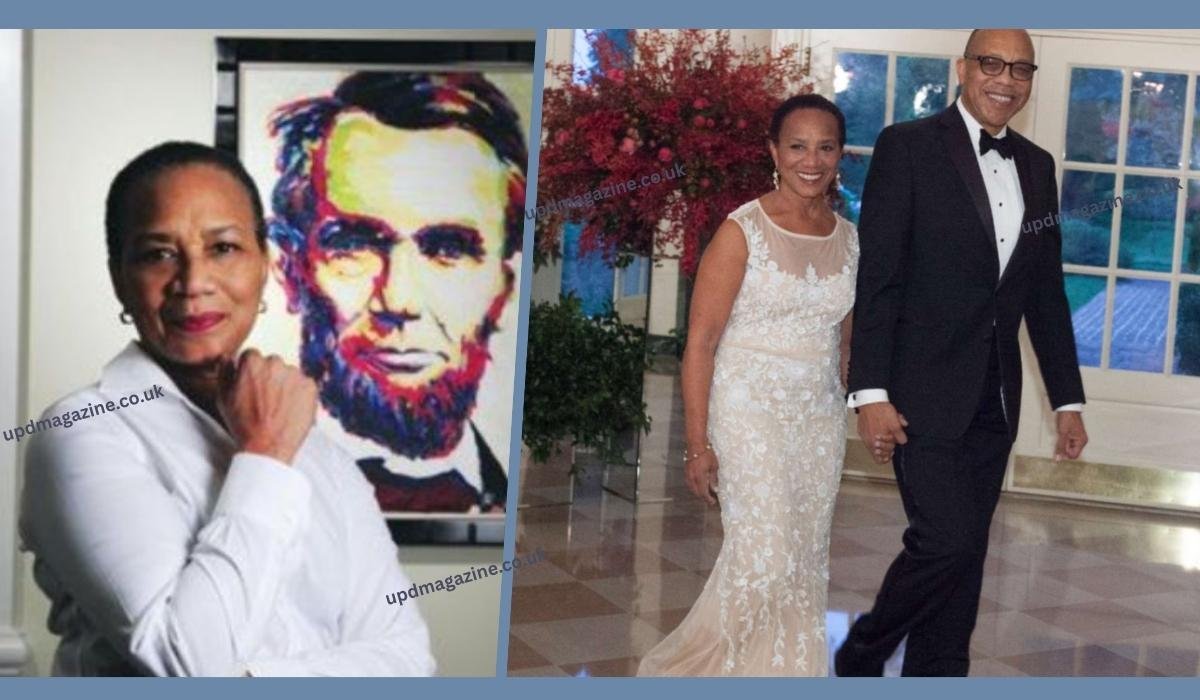
Avis C. Robinson was a woman of extraordinary depth, a polymath whose life’s work bridged the worlds of environmental science, social activism, and world-class fine art. While many recognized her as the wife of Pulitzer Prize-winning journalist Eugene Robinson, she carved out a profound legacy of her own. Born on July 26, 1953, in Baltimore, Maryland, she spent her seventy years on this earth as a tireless advocate for history, education, and the aesthetic power of the African American experience. Her journey from the halls of Harvard University to the walls of the National Gallery of Art is a testament to a spirit that refused to be confined by single labels or traditional expectations.
Avis C. Robinson: Quick Reference Bio
| Full Name | Avis Collins Robinson |
| Date of Birth | July 26, 1953 |
| Place of Birth | Baltimore, Maryland, U.S. |
| Date of Death | October 28, 2023 (Aged 70) |
| Nationality | American |
| Ethnicity | African American, European, and Nottoway Indian |
| Education | Academy of the Holy Cross (1971); University of Maryland (B.A., 1974); Golden Gate University (M.A. Finance); Harvard University (M.P.A., 1988) |
| Primary Professions | Fine Artist, Environmentalist, Philanthropist |
| Government Career | Deputy Director, Office of Atmospheric Programs at the U.S. EPA (20+ years) |
| Philanthropy | Founder of Washington Metropolitan Scholars (WMS) |
| Notable Artworks | Abraham Lincoln Portrait (Ford’s Theatre), Piano Keys (U.S. Mission to the UN), Black Hands Moving Colors |
| Artistic Style | “Painting with cloth”; Mixed media combining quilts, broadcloth, and acrylics |
| Spouse | Eugene Robinson (Pulitzer Prize-winning journalist); Married 1978 |
| Children | Aaron Robinson, Lowell Robinson |
| Historical Legacy | Donated the “Please Remember Me” collection to the Smithsonian (NMAAHC) |
| Key Honors | FAPE “30 for 30” Leading American Artists (2016); Resident at The Studios of Key West |
The Formative Years in Baltimore and Maryland
The story of Avis C. Robinson begins in the vibrant community of Baltimore, Maryland. Growing up in a household that valued both intellectual rigor and creative expression, she was the daughter of Annie Ruth and Edward Rhodes Collins. Her mother, a cancer researcher and painter, famously dubbed Avis the “family historian” at a young age, a title she would grow to embody through her extensive collection of artifacts and her narrative-driven artwork. These early years were characterized by a deep connection to her roots—a blend of African American, European, and Nottoway Indian heritage—which provided the rich cultural soil from which her later masterpieces would grow.
Educational Excellence: From Maryland to Harvard
Academic achievement was a cornerstone of Avis C. Robinson’s life. She graduated from the Academy of the Holy Cross in 1971 before pursuing higher education with relentless ambition. She earned her B.A. from the University of Maryland in 1974, but her thirst for knowledge did not stop there. She later obtained two master’s degrees: one in finance from Golden Gate University and a Master of Public Administration from Harvard University in 1988. This high-level training in economics and policy provided her with the analytical tools to navigate the complex structures of government and non-profit leadership, long before she became a household name in the American art scene.
A Stellar Career at the Environmental Protection Agency
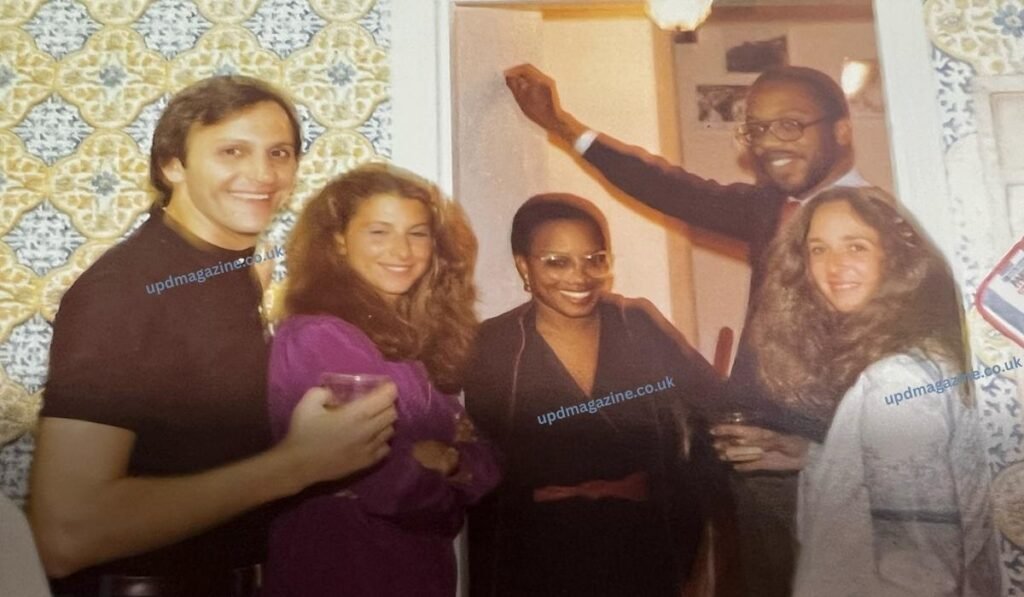
For more than two decades, Avis C. Robinson served with distinction at the U.S. Environmental Protection Agency (EPA). During her tenure, she rose to the position of deputy director of the Office of Atmospheric Programs, where she conducted pioneering work on climate change. Long before the global climate crisis dominated daily headlines, Robinson was coordinating with governments in Asia and sub-Saharan Africa to address environmental justice. Her work at the EPA was not merely administrative; it was an act of global service, ensuring that marginalized populations were not left behind in the fight for a sustainable planet.
Founding the Washington Metropolitan Scholars
In 2003, Avis C. Robinson transitioned from the federal government to the world of philanthropy, driven by a desire to uplift the next generation. She founded the Washington Metropolitan Scholars (WMS), a non-profit organization dedicated to connecting high-achieving, low-income minority students with elite universities. Under her visionary leadership, the program provided college access and financial aid to more than 1,000 students. Robinson understood that education was the ultimate lever for social mobility, and she dedicated her life to ensuring that talented young men and women in the D.C. area had the resources to succeed at the nation’s top institutions.
The Transition to a Full-Time Artist
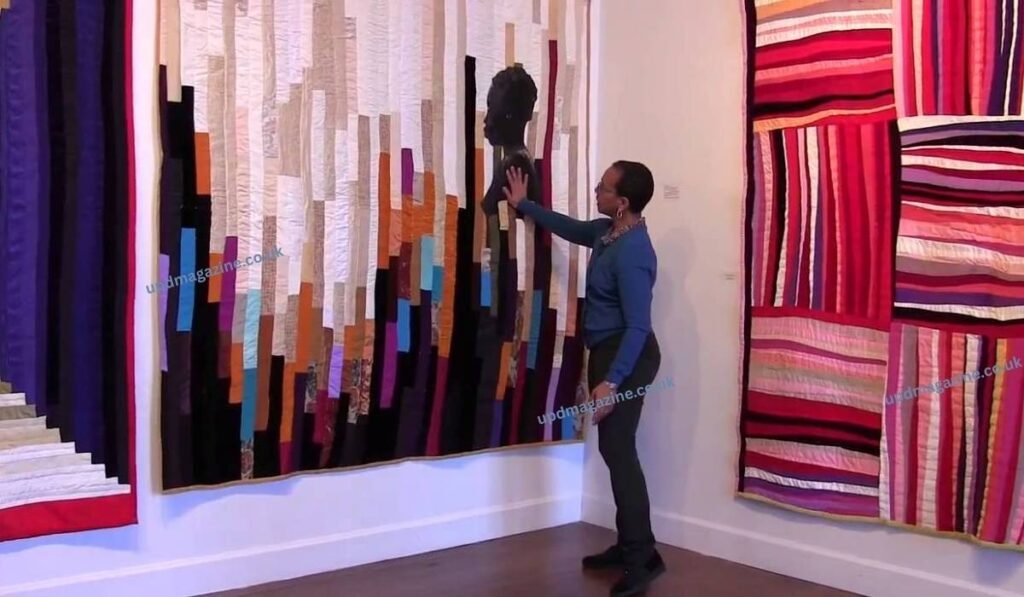
While she had always painted and quilted in private, it was in 2008 that Avis C. Robinson decided to devote her full energies to her craft. This transition was more than a career change; it was a spiritual homecoming. She began to synthesize her background as a researcher and historian with her skill as a seamstress and painter. Her work quickly garnered attention for its unique “painting with cloth” technique, where she used bold colors and free-form lines to create striking abstract and figurative images. This period marked the beginning of her emergence as a major figure in contemporary American art.
The Iconic Abraham Lincoln Portrait at Ford’s Theatre
One of the most significant milestones in the career of Avis C. Robinson occurred in 2009. Her mixed-media portrait of Abraham Lincoln was selected after a nationwide search to be the single iconic image installed in the renovated lobby of Ford’s Theatre. The portrait, which integrates antique quilts and broadcloth with acrylic paint, offers a layered, textured view of the president who ended slavery. This commission catapulted her into the national spotlight, proving that her unique aesthetic could speak to the very heart of American history and the complex legacy of the Great Emancipator.
“Please Remember Me”: The Robinson Historical Collection
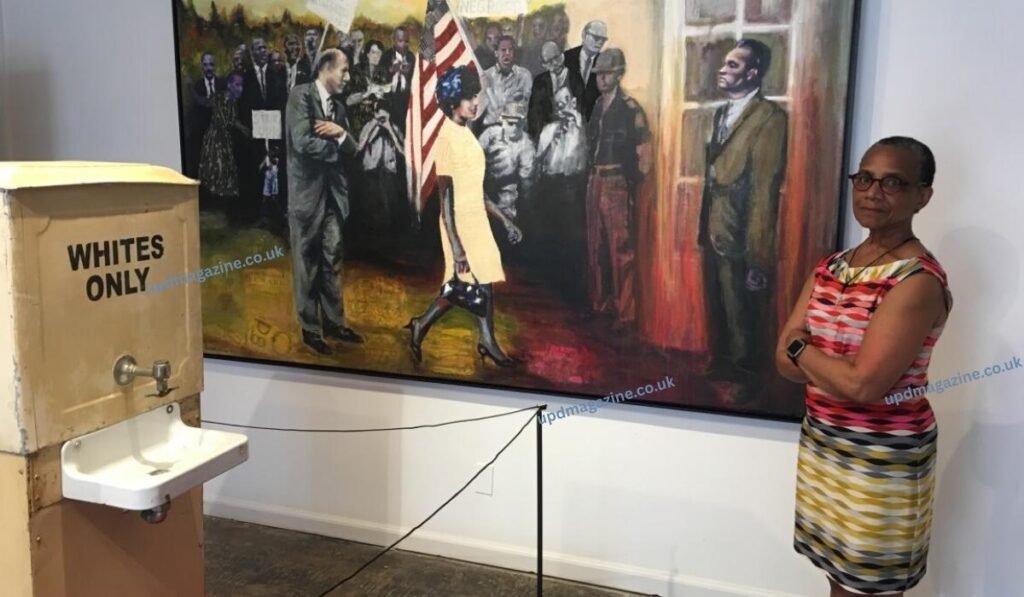
Beyond her own creations, Avis C. Robinson was a passionate collector of African American history. Alongside her husband, she amassed a collection of nearly 3,000 artifacts, including slave traders’ journals, 17th-century slave shackles, and rare documents from the Civil Rights Movement. She titled this collection “Please Remember Me,” a poignant tribute to the individuals whose lives were captured in these objects. Many of these items were eventually donated to the Smithsonian National Museum of African American History and Culture, ensuring that the “lost history” she spent a lifetime uncovering would be preserved for all Americans.
Quiltmaking as a Visual Language
The quilts of Avis C. Robinson are not mere textiles; they are sophisticated works of art that challenge the boundaries of the medium. Influenced by the legendary Gee’s Bend quilters of Alabama, she developed a pictorial language that explored themes of race, gender, and oppression. Her fabric works, such as the majestic “Piano Keys,” are celebrated for their rhythmic use of color and motion. By erasing the lines between traditional quilting and modern painting, she created a style that was entirely her own, earning her a place among the most respected textile artists of the 21st century.
International Recognition and FAPE
The global reach of Avis C. Robinson’s work is perhaps best exemplified by her involvement with the Foundation for Art and Preservation in Embassies (FAPE). Her quilts and paintings are permanently installed in U.S. embassies around the world, from London and Moscow to the U.S. Mission to the United Nations in New York. In 2016, she was named to FAPE’s “30 for 30” list of leading American artists. Even near the end of her life, she was commissioned to create eight major fabric pieces for the new U.S. Embassy in Hanoi, a project that continues her legacy of cultural diplomacy.
Marriage to Eugene Robinson: A Partnership of Purpose
The marriage of Avis C. Robinson and Eugene Robinson was a true partnership of equals that spanned 45 years. Married in 1978, the couple supported each other through decades of high-stakes careers and public life. While Eugene covered world events and national politics for The Washington Post, Avis was his constant collaborator and muse. Together, they raised two sons, Aaron and Lowell, and built a life centered on family, service, and the preservation of Black history. Their shared commitment to social justice and the arts made them a formidable force in the Washington, D.C., community and beyond.
Legacy at Claflin University
The connection between Avis C. Robinson and Claflin University, a historically Black university in South Carolina, is deeply personal. In 2016, she and Eugene donated a monumental painting titled “Alonzo Smith, Black Mason Building Claflin,” which depicts Eugene’s great-uncle working on the campus in the early 20th century. The painting, valued at $100,000, hangs in the university’s administration building. This gift was more than a financial donation; it was a way of honoring the “extraordinary courage and perseverance” of the Black workmen who built the institutions that sustained the community during the Jim Crow era.
Exhibitions and One-Woman Shows
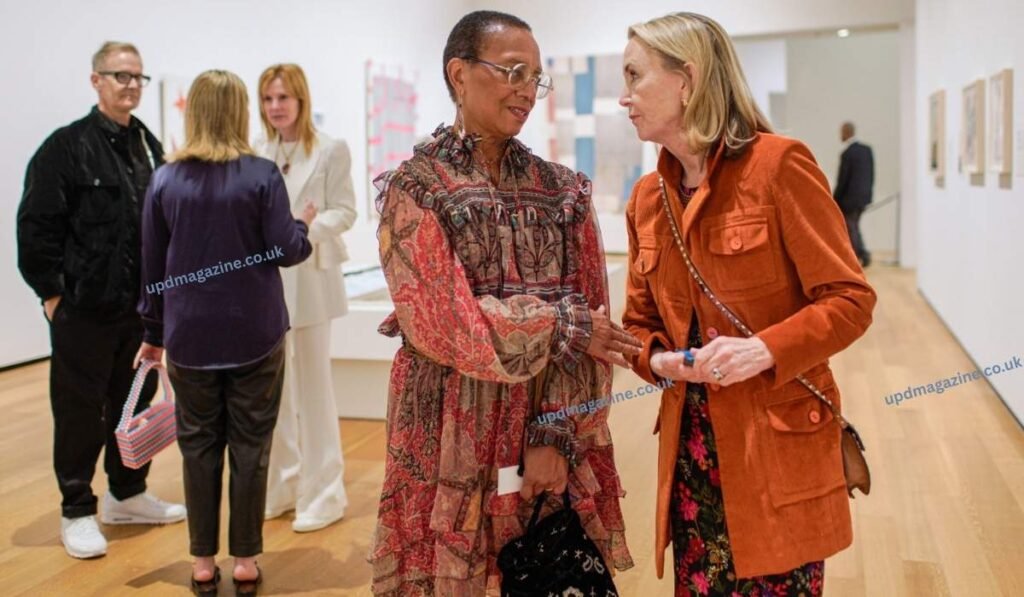
Throughout her artistic career, Avis C. Robinson was the subject of numerous prestigious exhibitions. She had two successful one-woman shows at the Studios of Key West and a solo exhibition at the Columbus Museum of Art in Ohio. Her work was also featured at the National Museum of Women in the Arts and the National Gallery of Art. These shows highlighted her ability to use “soul” as a central theme, portraying both the metaphysical and cultural depth of the human experience. Her ability to fill a room with the “funk” and “spirit” of her fabric works became her artistic trademark.
Exploring Tensions: Race, Gender, and Power
At its core, the art of Avis C. Robinson was a fearless exploration of America’s unacknowledged tensions. She used her canvas and cloth to confront the horrors of the past while celebrating the beauty of resilience. Whether painting icons like Harriet Tubman and John Lewis or depicting anonymous laborers, she sought to give voice to those who had been silenced. Her work was never just about aesthetics; it was a form of activism, a way of using beauty to force a conversation about the fundamental injustices that continue to shape the American landscape.
Later Years and The Washington Post Seasonal Series
In her final years, Avis C. Robinson continued to innovate. She embarked on a unique project for The Washington Post, creating a series of quilted fabric pieces and accompanying essays to celebrate the four seasons. This project allowed her to blend her visual artistry with her skills as a writer and historian, bringing her work directly into the homes of thousands of readers. Even as she faced health challenges, her creative output remained prolific, characterized by a spirit that seemed to “speed up when everyone else seemed to be slowing down.”
The Passing of a Visionary
The world lost a singular talent when Avis C. Robinson passed away on October 28, 2023, at the age of 70, following a brief battle with cancer. Her death was met with a groundswell of tributes from the art world, political circles, and the many students she had mentored through the years. Organizations like MSNBC and the State Department honored her contributions to American culture and diplomacy. While she is no longer with us, the vibrant colors and profound messages of her quilts and paintings ensure that her presence will be felt for generations to come.
Conclusion: The Enduring Impact of Avis C. Robinson
The life of Avis C. Robinson was a masterpiece of multifaceted service. She was a scientist who protected our atmosphere, a philanthropist who opened doors for the marginalized, a historian who saved our collective memory, and an artist who showed us the beauty of the struggle with her husband Eugene Robinson. Her legacy is woven into the fabric of the nation—literally, through her quilts hanging in embassies, and figuratively, through the lives of the many people she inspired. Avis C. Robinson reminds us that we do not have to be just one thing; we can be artists, activists, and scholars all at once, as long as we lead with soul.
Frequently Asked Questions (FAQs)
1. Who was Avis C. Robinson?
Avis C. Robinson was a prominent American artist, environmentalist, and activist. She was best known for her unique “painting with cloth” technique and her marriage to journalist Eugene Robinson.
2. What is Avis C. Robinson’s most famous artwork?
Her most famous work is arguably the mixed-media portrait of Abraham Lincoln located at Ford’s Theatre in Washington, D.C.
3. What was Avis C. Robinson’s career before becoming a full-time artist?
Before her art career took off in 2008, she worked for over 20 years at the Environmental Protection Agency (EPA) and founded the Washington Metropolitan Scholars non-profit.
4. Where can I see the art of Avis C. Robinson today?
Her works are on permanent display at the U.S. Mission to the United Nations, various U.S. Embassies, the National Gallery of Art, and Claflin University.
5. How did Avis C. Robinson contribute to African American history?
She collected thousands of historical artifacts, many of which she donated to the Smithsonian National Museum of African American History and Culture, and she used her art to tell the stories of Black resilience and struggle.
6. What was the “Please Remember Me” collection?
“Please Remember Me” was the name given to the extensive collection of nearly 3,000 African American historical artifacts and documents assembled by Avis and her husband.
7. When did Avis C. Robinson pass away?
She passed away on October 28, 2023, at the age of 70, after a brief battle with cancer.