
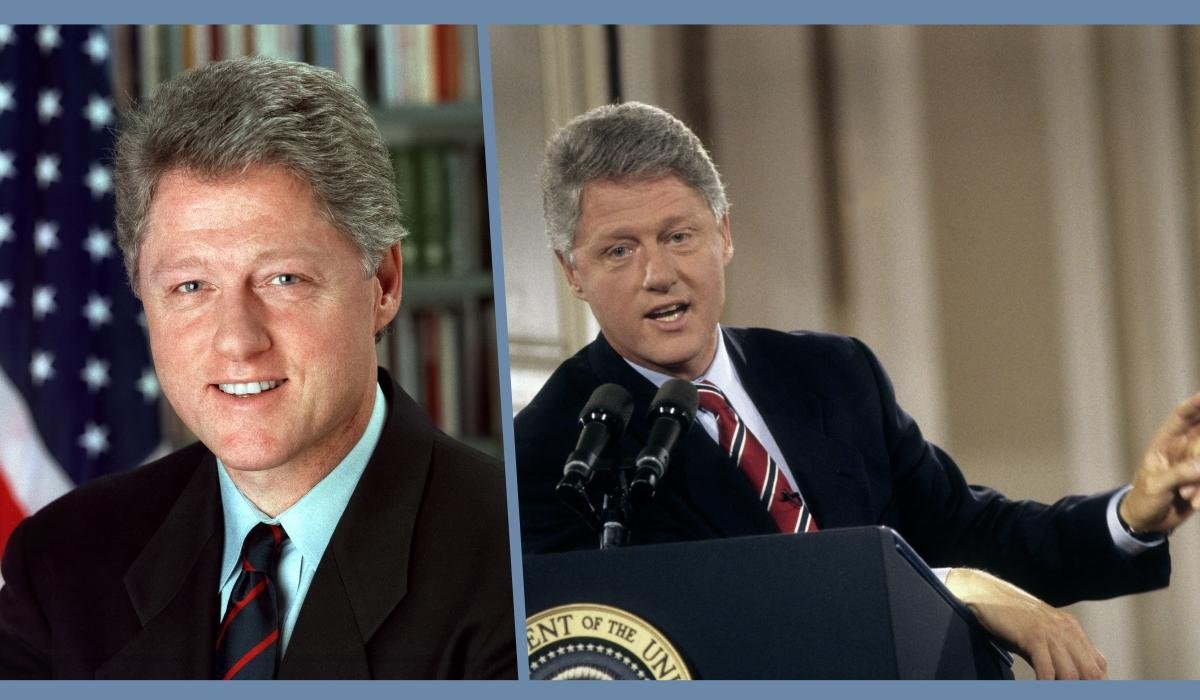
When people search for Bill Clinton Political Party, they are usually looking for a straightforward answer about the political identity of the 42nd president of the United States. Bill Clinton was a member of the Democratic Party, and his political career played a significant role in shaping the direction of American politics during the 1990s. Serving as president from January 20, 1993, to January 20, 2001, Clinton became known for his centrist political approach, economic policies, and efforts to modernize the Democratic Party. His journey from a small town in Arkansas to the White House is an important part of American political history.
Understanding his party affiliation also helps explain his leadership, campaign strategies, and lasting influence on the Democratic political movement.
Bill Clinton Political Party: Biography Overview
The following biography table provides a quick overview of Bill Clinton’s personal background, political affiliation, and presidential career. His Democratic identity remained central to his political journey, from his early state-level positions to his two terms in the White House. Clinton’s experience as a lawyer, attorney general, governor, and president helped him develop a practical approach to public leadership. He became one of the most recognizable Democratic politicians of the twentieth century and influenced the party’s approach to economic policy, social issues, and electoral strategy. The information below summarizes the essential facts about his life and political career, offering readers a convenient reference before exploring the details of his political ideology and presidential accomplishments.
| Category | Details |
|---|---|
| Full Name | William Jefferson Clinton |
| Birth Name | William Jefferson Blythe III |
| Known As | Bill Clinton |
| Date of Birth | August 19, 1946 |
| Birthplace | Hope, Arkansas, United States |
| Nationality | American |
| Political Party | Democratic Party |
| Political Ideology | New Democrat, centrist, Third Way |
| Profession | Lawyer, politician |
| Education | Georgetown University, Oxford University, Yale Law School |
| Wife | Hillary Rodham Clinton |
| Daughter | Chelsea Clinton |
| 42nd President of the United States | 1993–2001 |
| Governor of Arkansas | 1979–1981 and 1983–1992 |
| Arkansas Attorney General | 1977–1979 |
| Vice President | Al Gore |
| Presidential Election Victories | 1992 and 1996 |
Early Life and Family Background of Bill Clinton
Bill Clinton was born on August 19, 1946, in Hope, Arkansas, a small American town that became an important part of his public identity. His birth name was William Jefferson Blythe III, but he later adopted the surname Clinton after his mother married Roger Clinton. His biological father died in a car accident before his birth, leaving his mother, Virginia Blythe, to raise him during his early years. Growing up in Arkansas exposed Clinton to the economic challenges and social realities of ordinary American families. These experiences helped shape his interest in public service and his understanding of working-class concerns. His southern upbringing also influenced his communication style and ability to connect with voters from different backgrounds.
Education and the Beginning of His Political Interest
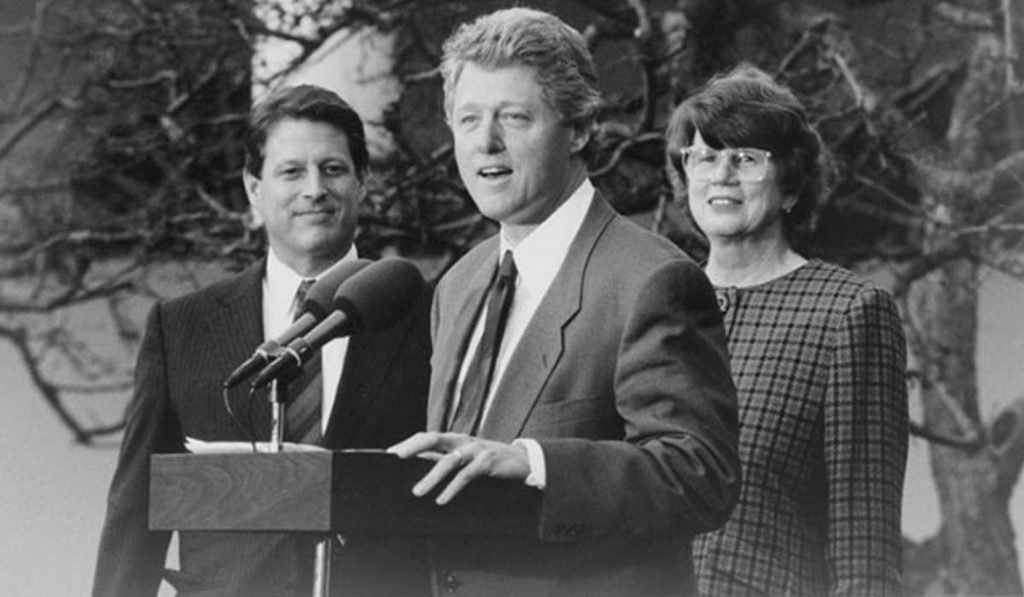
Clinton demonstrated an interest in politics during his school years, developing ambitions that eventually led him toward national leadership. He attended Georgetown University in Washington, D.C., where he studied international affairs and graduated in 1968. During his university years, he gained experience working with Senator William Fulbright of Arkansas, an influential Democratic politician. Clinton later received a Rhodes Scholarship to study at Oxford University in the United Kingdom. After Oxford, he attended Yale Law School, graduating in 1973. At Yale, he met Hillary Rodham, who later became his wife and a prominent political figure in her own right. His education provided a strong foundation for understanding government, public policy, diplomacy, and the Democratic political tradition.
Why Bill Clinton Joined the Democratic Party
Bill Clinton’s political identity developed within the Democratic Party, whose historical priorities included economic opportunity, social welfare, civil rights, and public investment. His interest in politics was influenced by leaders such as John F. Kennedy, whose presidency inspired many young Americans during the 1960s. Clinton believed that government could help improve education, expand opportunities, and address economic inequality while supporting individual responsibility. However, his approach differed from the more traditional liberal positions associated with some Democratic leaders. He favored practical solutions that could attract moderate voters and maintain public confidence in government. This combination of Democratic values and centrist thinking eventually became a defining characteristic of his political identity and helped him establish a national reputation.
Bill Clinton Political Party and His Democratic Political Identity
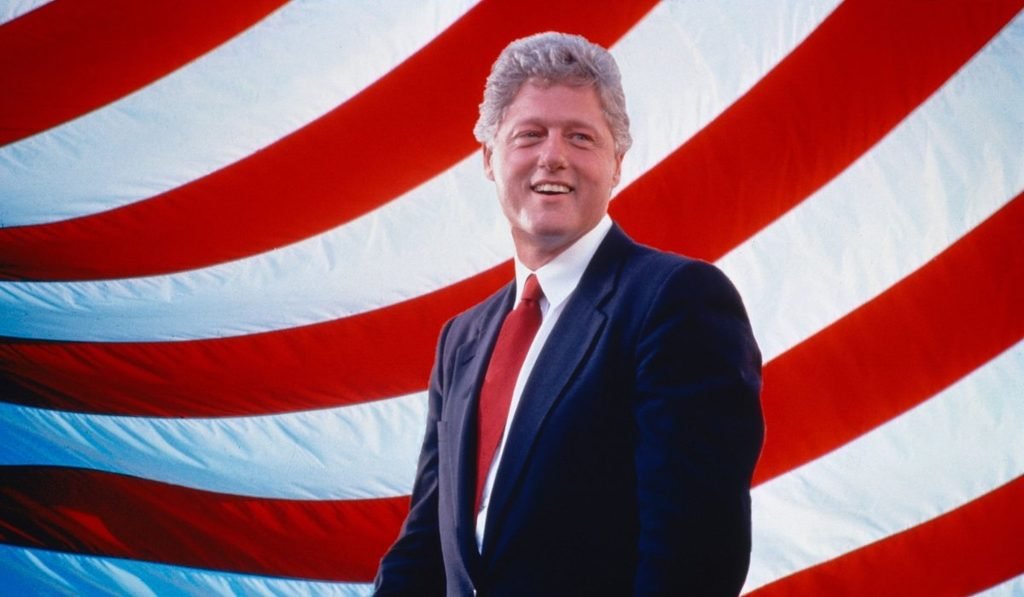
The answer to the question “What is Bill Clinton’s political party?” is the Democratic Party. However, understanding his affiliation requires more than identifying the party name. Clinton represented a moderate and pragmatic political tradition that became particularly influential during the 1990s. He supported many Democratic priorities, including education, healthcare access, environmental protection, and economic opportunity. At the same time, he embraced policies associated with fiscal discipline, business competitiveness, and government reform. His political identity was often described as centrist rather than strongly liberal. This approach helped him appeal to voters who wanted a Democratic president but also supported moderate economic policies. His presidency became an important example of how political parties can evolve to respond to changing public expectations.
Bill Clinton’s Early Career in Arkansas Politics
Clinton began his professional political career after completing his legal education and returning to Arkansas. In 1974, he ran for a seat in the U.S. House of Representatives but narrowly lost to Republican John Paul Hammerschmidt. Although the defeat was disappointing, it provided valuable experience in campaigning and understanding voter concerns. Clinton subsequently entered state politics and was elected Arkansas Attorney General in 1976, taking office in 1977. His work in that position helped establish his reputation as a capable public official. He focused on legal issues, consumer concerns, and government administration. His growing experience within the Democratic Party prepared him for a larger leadership role, eventually leading to his election as governor of Arkansas.
Bill Clinton as Governor of Arkansas
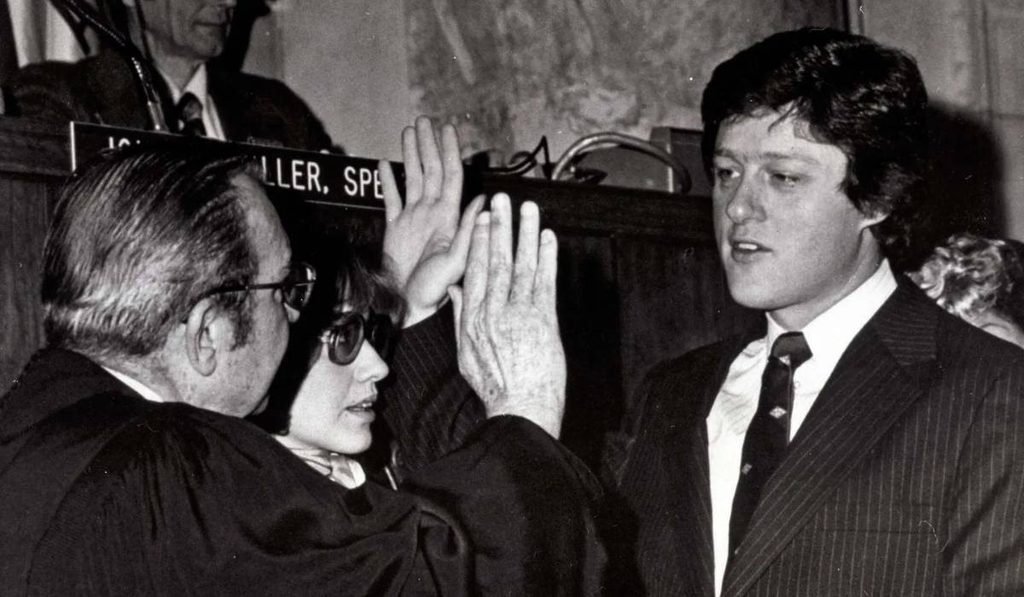
Bill Clinton was elected governor of Arkansas in 1978, becoming one of the youngest governors in the United States at the time. His first term focused on education, infrastructure, and improving public administration. However, several unpopular decisions, including a vehicle-related tax increase, contributed to his defeat in the 1980 election. Rather than abandoning politics, Clinton reassessed his approach and worked to rebuild public support. He won the governorship again in 1982 and remained in office until 1992, serving multiple terms. During this period, he gained national attention for his education reforms and administrative leadership. His success in Arkansas demonstrated how a Democratic politician could combine progressive objectives with moderate political messaging and practical governance.
The Rise of the New Democrat Movement
One of the most important developments in Clinton’s political career was his association with the New Democrat movement. This movement emerged within the Democratic Party as leaders sought to respond to the growing popularity of conservative politics during the 1980s. New Democrats believed that the party needed to modernize its message by emphasizing economic growth, personal responsibility, fiscal discipline, and government efficiency. Clinton became a prominent figure in this effort through his involvement with the Democratic Leadership Council. Rather than rejecting traditional Democratic principles, he attempted to reinterpret them for a changing political environment. His approach emphasized that government could promote opportunity while avoiding excessive bureaucracy. This philosophy became a central feature of his presidential campaigns and administration.
Bill Clinton Political Party and the Democratic Leadership Council
The Democratic Leadership Council (DLC) played an important role in Clinton’s political development. It brought together moderate Democrats and business-oriented political thinkers who wanted to strengthen the party’s national appeal. Clinton served as chairman of the organization during 1990 and 1991, helping promote a message of economic opportunity, responsibility, and political moderation. His leadership reflected the belief that Democrats could win national elections by connecting with middle-class voters without abandoning their broader commitment to social progress. The DLC encouraged policy discussions on economic competitiveness, education, and government reform. Clinton’s association with the organization helped establish him as a leading national Democratic figure and strengthened his position as a potential presidential candidate.
Bill Clinton’s 1992 Presidential Election Campaign
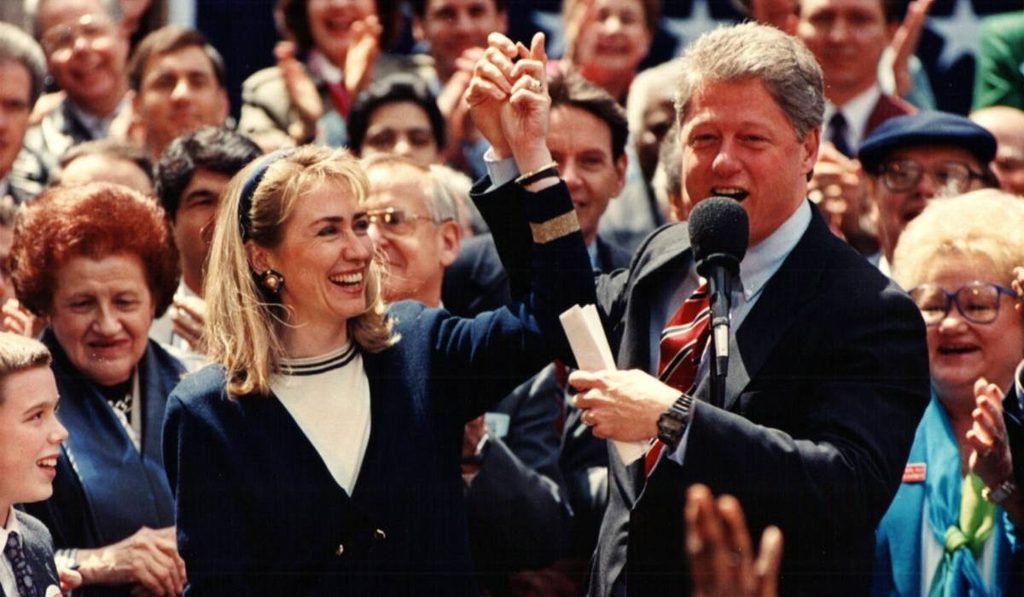
The 1992 presidential election marked a major turning point in Clinton’s political career. He won the Democratic Party’s presidential nomination after competing against several other candidates. His campaign focused heavily on economic difficulties facing the United States, including slow growth and concerns about employment. Clinton presented himself as a younger, energetic leader who could understand the needs of ordinary Americans. His campaign slogan, “Putting People First,” reflected his emphasis on economic opportunity and public welfare. He challenged incumbent Republican President George H. W. Bush and independent candidate Ross Perot. Clinton won the election with approximately 43% of the popular vote and 370 electoral votes. His victory restored Democratic control of the presidency after twelve years of Republican leadership.
Bill Clinton Becomes the 42nd Democratic President
On January 20, 1993, Bill Clinton was inaugurated as the 42nd president of the United States. His election represented a new generation of Democratic leadership, as he became the first baby-boomer president. Clinton entered office during a period of economic uncertainty and international transition following the end of the Cold War. His administration aimed to strengthen the economy, improve education, reform healthcare, and modernize government. Vice President Al Gore played an important role in the administration, particularly in areas involving technology and environmental policy. Clinton’s leadership style emphasized communication, political negotiation, and practical decision-making. His presidency became closely associated with the economic expansion of the 1990s, although his administration also faced significant political disagreements and controversies.
Bill Clinton’s Democratic Economic Policies
Economic policy was one of the most important areas of Clinton’s presidency. His administration pursued a combination of deficit reduction, economic growth, investment, and private-sector development. In 1993, Clinton signed the Omnibus Budget Reconciliation Act, which increased taxes on higher-income earners and aimed to reduce the federal budget deficit. The administration also supported policies designed to encourage employment and strengthen the economy. During the 1990s, the United States experienced substantial economic growth, supported by technological innovation, productivity improvements, and expanding business activity. By the end of Clinton’s presidency, the federal government had recorded budget surpluses. Although economic conditions had many contributing factors, Clinton’s fiscal policies became a major part of his Democratic presidential legacy.
Healthcare Reform and Clinton’s Democratic Agenda
Healthcare reform was a major priority during Clinton’s first presidential term. The administration believed that millions of Americans needed better access to affordable healthcare and that the existing system placed financial pressure on families and businesses. Hillary Rodham Clinton led an influential task force that developed a comprehensive healthcare reform proposal. The plan aimed to expand coverage and reorganize parts of the healthcare system. However, it faced strong opposition from Republicans, some Democrats, healthcare organizations, and business groups. The proposal failed to pass Congress in 1994. This defeat became one of the administration’s most significant early setbacks. Despite the failure, healthcare remained an important issue in Democratic politics, and Clinton later supported more limited measures to improve healthcare access.
Welfare Reform and Government Responsibility
Welfare reform became another defining feature of Clinton’s Democratic presidency. Although Democrats traditionally supported social assistance programs, Clinton believed that the welfare system needed changes to encourage employment and reduce long-term dependence. In 1996, he signed the Personal Responsibility and Work Opportunity Reconciliation Act, which significantly restructured federal welfare policy. The law introduced time limits on certain benefits and gave states greater responsibility for administering assistance programs. Supporters argued that the reforms encouraged work and helped reduce welfare dependency. Critics, however, raised concerns about the effects on low-income families and the availability of adequate support.
Clinton’s decision demonstrated his willingness to adopt moderate policies that differed from some traditional Democratic positions, while continuing to emphasize economic opportunity and personal responsibility.
Bill Clinton Political Party and His Social Policies
Clinton’s social policies reflected a combination of traditional Democratic commitments and political compromises. He supported civil rights, educational opportunity, environmental protection, and certain reproductive rights. His administration also worked to strengthen protections against discrimination and improve opportunities for disadvantaged communities. However, some decisions created controversy among Democratic supporters. The “Don’t Ask, Don’t Tell” military policy, introduced in 1993, allowed gay and lesbian service members to remain in the military under restrictions on openly discussing their sexual orientation. In 1996, Clinton signed the Defense of Marriage Act, which limited federal recognition of same-sex marriage. These decisions reflected the political pressures of the period.
His social policy record remains complex, showing both support for Democratic principles and compromises that later generations of Democrats reconsidered.
Bill Clinton’s Foreign Policy as a Democratic President
Clinton’s foreign policy focused on diplomacy, international cooperation, economic integration, and the use of American influence to address global conflicts. Following the Cold War, the United States faced a changing international environment that required new approaches to security and international relations. Clinton supported expanding NATO, strengthening trade relationships, and working with international organizations. His administration also participated in efforts to resolve conflicts in the Balkans and the Middle East. In Bosnia, American diplomacy contributed to the negotiations that produced the Dayton Peace Accords in 1995. His administration also supported peace initiatives in Northern Ireland. Although his foreign policy faced criticism, it demonstrated his belief that international cooperation could support American security and economic interests.
NAFTA and Clinton’s Economic Globalization Strategy
One of the most influential economic decisions of Clinton’s presidency was his support for the North American Free Trade Agreement (NAFTA). The agreement involved the United States, Canada, and Mexico and aimed to reduce trade barriers between the three countries. Clinton signed the legislation implementing NAFTA in 1993, and it took effect in 1994. His administration argued that increased trade would expand markets, encourage investment, and create economic opportunities. However, the agreement generated considerable controversy. Critics, including some labor organizations and Democratic politicians, argued that it could encourage companies to move jobs to countries with lower labor costs.
NAFTA became a lasting symbol of Clinton’s centrist economic approach and illustrated the divisions within the Democratic Party over globalization and trade.
Bill Clinton’s 1996 Reelection Campaign
In 1996, Clinton sought a second presidential term after four years of economic and political developments. His campaign emphasized economic growth, employment, education, and the importance of maintaining progress. The Republican nominee was Bob Dole, a longtime senator from Kansas, while Ross Perot again participated as an independent candidate. Clinton benefited from improved economic conditions and his ability to appeal to moderate voters. He won reelection with approximately 49.2% of the popular vote and 379 electoral votes. His victory made him the first Democratic president since Franklin D. Roosevelt to win two consecutive presidential elections. The 1996 election strengthened Clinton’s influence within the Democratic Party and confirmed the effectiveness of his centrist campaign strategy.
Political Controversies and the Impeachment of Bill Clinton
Clinton’s second term was marked by major political controversies, particularly the investigation into his relationship with White House intern Monica Lewinsky. The controversy led to investigations concerning allegations of perjury and obstruction of justice. In December 1998, the House of Representatives impeached Clinton, making him the second American president to face impeachment at that time. The Senate conducted a trial in 1999 but did not reach the two-thirds majority required to convict him. Clinton remained in office and completed his second term in January 2001. The impeachment created intense political divisions and affected public discussions about presidential accountability. Although his presidency continued to receive recognition for economic achievements, the controversy became an enduring part of his political legacy.
Bill Clinton’s Influence on the Democratic Party
Bill Clinton’s influence on the Democratic Party extended beyond his two presidential terms. He helped establish a political approach that combined traditional Democratic priorities with moderate economic policies and a stronger emphasis on personal responsibility. His leadership encouraged Democrats to reconsider how they communicated with middle-class voters, business communities, and politically independent citizens. The New Democrat movement became influential in national political discussions, particularly regarding trade, welfare, taxation, and government spending. Supporters viewed Clinton as a successful modernizer who helped the party regain the presidency. Critics argued that his policies moved Democrats too far toward the political center. Nevertheless, Clinton’s presidency significantly influenced the party’s strategy, policy debates, and electoral identity during the late twentieth century.
Bill Clinton’s Life After the Presidency and Lasting Legacy
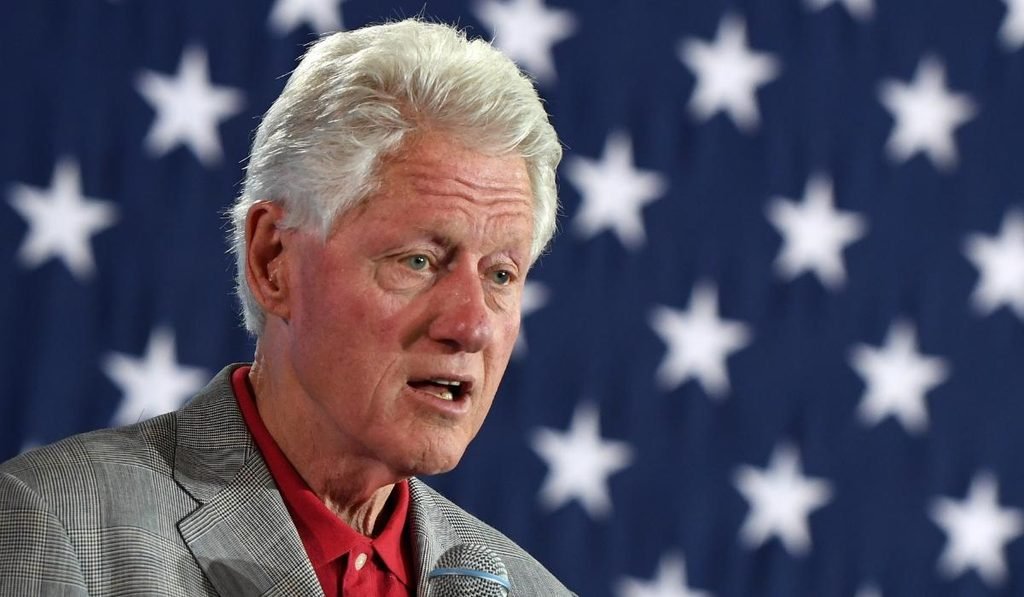
After leaving office in 2001, Bill Clinton continued to participate in public life through charitable activities, international initiatives, and political engagement. He established the Clinton Foundation, which supports projects involving global health, economic development, climate initiatives, and other public-interest issues. Clinton also remained an influential figure within the Democratic Party, supporting Democratic presidential candidates and participating in political discussions. His legacy is often associated with the economic prosperity of the 1990s, welfare reform, international diplomacy, and the modernization of Democratic politics. At the same time, his administration’s controversies and policy compromises remain subjects of debate. His career demonstrates how a politician’s party affiliation can remain constant while their political strategy and governing philosophy evolve over time.
Conclusion
The answer to Bill Clinton Political Party is clear: Bill Clinton was a member of the Democratic Party and served as the 42nd president of the United States from 1993 to 2001. His political journey began in Arkansas, where he developed a reputation for education reform, practical leadership, and political moderation. Through the New Democrat movement, he helped reshape the Democratic Party’s national message, combining traditional Democratic goals with centrist economic policies. His presidency brought substantial economic growth, welfare reform, international diplomacy, and significant political controversy. Clinton’s legacy remains influential in American political history because he demonstrated how Democratic leadership could adapt to changing economic conditions, public expectations, and electoral challenges while continuing to shape the party’s future direction.
Frequently Asked Questions (FAQs)
1. What political party does Bill Clinton belong to?
Bill Clinton belongs to the Democratic Party. He has been a prominent Democratic politician throughout his career, serving as Arkansas governor and the 42nd president of the United States. His political philosophy is commonly associated with the New Democrat movement.
2. Was Bill Clinton a Republican or a Democrat?
Bill Clinton was a Democrat, not a Republican. He won the Democratic presidential nomination in 1992 and defeated Republican President George H. W. Bush in the general election. He was reelected in 1996 as the Democratic candidate.
3. What was Bill Clinton’s political ideology?
Clinton’s political ideology is generally described as centrist, moderate, and associated with the Third Way. He supported traditional Democratic priorities while also promoting fiscal responsibility, free trade, welfare reform, and government efficiency.
4. How many years did Bill Clinton serve as president?
Bill Clinton served as president for eight years, from January 20, 1993, to January 20, 2001. He won two consecutive presidential elections, in 1992 and 1996.
5. Who was Bill Clinton’s vice president?
Al Gore served as Bill Clinton’s vice president throughout both presidential terms. Gore was also the Democratic presidential nominee in the 2000 election, which he narrowly lost to Republican George W. Bush.
6. Did Bill Clinton change the Democratic Party?
Yes. Clinton helped popularize the New Democrat movement, which emphasized political moderation, economic growth, fiscal discipline, and personal responsibility. His approach influenced Democratic political strategies and policy discussions during the 1990s and beyond.
7. Is Bill Clinton still associated with the Democratic Party?
Yes. Bill Clinton remains historically and politically associated with the Democratic Party. Although he is no longer president, he continues to be recognized as an influential Democratic leader whose presidency helped shape the party’s modern political identity.