
The American political landscape has entered a period of unprecedented tension as we move through February 2026. A major US election controversy Trump Democrats standoff has reached a boiling point, fueled by the administration’s aggressive push to reshape how elections are conducted across the country. President Donald Trump has recently intensified his calls for a federal “takeover” of election administration, specifically targeting what he describes as “crooked” processes in major Democratic-led cities. This bold maneuver has sparked a fierce legal and rhetorical battle with Democrats, who view these actions as a direct assault on state sovereignty and the democratic process itself.
As the 2026 midterm elections approach, the stakes could not be higher. The administration’s strategy involves a combination of legislative proposals, such as the MEGA Act (Make Elections Great Again), and direct executive actions, including controversial Department of Justice (DOJ) lawsuits against states that refuse to share sensitive voter data. With Republicans holding a slim majority in Congress and Democrats fighting to regain control, the debate over “election integrity” versus “voter protection” has become the defining narrative of the year. This article explores the intricate details of this developing crisis and what it means for the future of American democracy.
The Origins of the 2026 Election Control Proposals
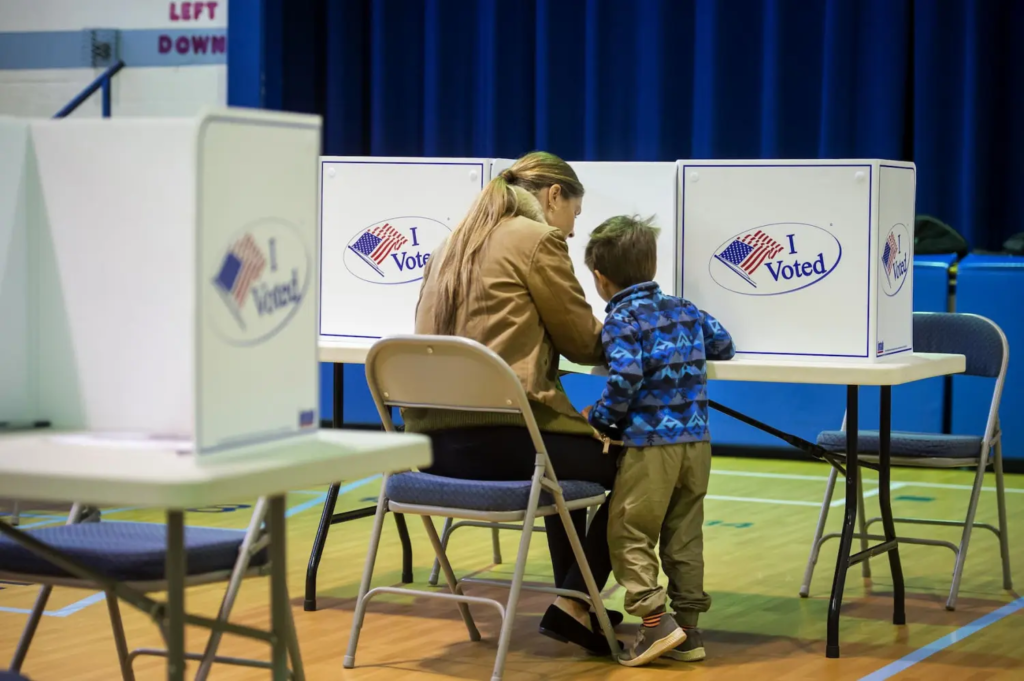
The current US election controversy Trump Democrats friction stems from a series of provocative statements made by President Donald Trump in early January 2026. During high-profile interviews, the President expressed regret for not using the National Guard to seize voting machines during previous cycles and suggested that the federal government should “nationalize” the voting process in at least 15 key jurisdictions. These areas almost exclusively include Democratic strongholds like Atlanta, Philadelphia, Detroit, and Milwaukee. The administration argues that federal intervention is necessary to prevent what they claim is widespread non-citizen voting and “rigged” results.
Trump’s Call for Nationalizing the Vote
In a move that shocked constitutional scholars, Donald Trump explicitly urged Republicans to “take over” the voting process. By suggesting that the federal government should supersede state authority, he has challenged a core tenet of American federalism. The President’s rhetoric on platforms like the Dan Bongino podcast has focused on the idea that states are “not sophisticated enough” to catch “cheating” by Democrats. This narrative has energized his base but has also created a rift within his own party, as some conservative leaders remain wary of centralizing so much power in Washington, D.C.
Democratic Response to Federal Overreach
Democrats have responded with a unified front, labeling the President’s proposals as a blueprint for “stealing” the upcoming midterms. Leaders like DNC Chairman Ken Martin and California Governor Gavin Newsom have warned that the administration is preparing to use federal agencies, including ICE and the FBI, to intimidate voters at the polls. They argue that the focus should be on expanding access rather than creating hurdles. The legal wing of the Democratic Party has already begun filing preemptive lawsuits to block any executive orders that attempt to bypass the Elections Clause of the Constitution.
The MEGA Act: A Legislative Flashpoint
At the heart of the legislative US election controversy Trump Democrats battle is the Make Elections Great Again (MEGA) Act. Introduced by House Republicans in late January 2026, this 83-page bill seeks to impose strict federal standards on state-run elections. While supporters frame it as a necessary “integrity package,” critics see it as an attempt to “flatten federalism.” The bill includes provisions that would fundamentally change how Americans interact with the ballot box, particularly in states that have embraced more flexible voting methods over the last decade.
Key Provisions of the MEGA Act
The MEGA Act proposes several radical changes to the current system. Most notably, it calls for a national requirement for documentary proof of citizenship to register to vote, which would require an original birth certificate or passport. Additionally, the act seeks to:
- Prohibit universal vote-by-mail systems immediately.
- Ban ranked-choice voting in all federal elections.
- Mandate “auditable” paper ballots (though most states already use them).
- Require states to share detailed voter registration lists with the Attorney General.
The Impact on State Sovereignty
The push for the MEGA Act has raised significant questions about state sovereignty. Historically, Article I, Section 4 of the Constitution gives state legislatures the primary authority to determine the “times, places, and manner” of elections. By attempting to mandate these rules from the federal level, the Trump administration is testing the limits of congressional power. Democrats argue that these requirements, particularly the citizenship proof, are designed to disenfranchise millions of eligible voters—such as married women whose names have changed or low-income citizens who lack expensive passports.
DOJ Lawsuits and the Battle for Voter Data
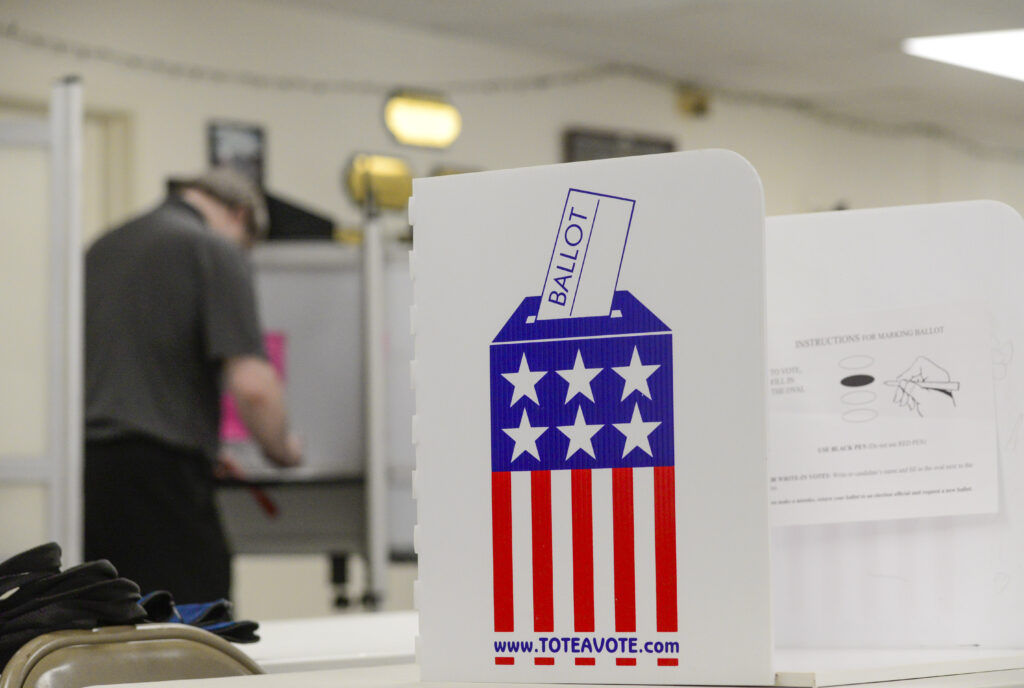
Beyond the halls of Congress, the US election controversy Trump Democrats is playing out in the federal court system. Attorney General Pam Bondi has spearheaded a massive legal campaign, suing at least 24 states and the District of Columbia for refusing to hand over comprehensive voter data. The DOJ is demanding information that includes Social Security numbers, dates of birth, and home addresses. The administration claims this data is needed to audit voter rolls and remove ineligible names, but state officials are sounding the alarm over privacy and security.
Defiance from Democratic-Led States
The states currently being sued are predominantly led by Democrats who view the DOJ’s demands as a fishing expedition for identity theft or voter intimidation. Secretaries of State, such as Maine’s Shenna Bellows, have called the demands a “power grab” and a threat to the “Holy Trinity of identity theft.” These officials argue that their state laws protect this sensitive information and that the federal government has no right to a centralized national voter database. The resulting legal stalemate is likely to head to the Supreme Court before the 2026 midterms.
The Role of the FBI and Federal Agencies
The controversy reached a fever pitch in late January 2026 when the FBI conducted a raid on the election headquarters in Fulton County, Georgia. The search, reportedly focused on ballots from the 2020 election, was accompanied by Director of National Intelligence Tulsi Gabbard. This unprecedented use of federal law enforcement to investigate local election offices has terrified local administrators. Democrats have characterized the raid as a “dry run” for seizing control of vote counting in November 2026, further deepening the mistrust between the administration and local election boards.
Potential Disruptions to the 2026 Midterms
As the 2026 calendar progresses, the possibility of actual disruptions at the polls is becoming a central concern for election experts. The US election controversy Trump Democrats is no longer just a war of words; it is manifesting in physical security preparations and budget battles. There are growing fears that the administration might invoke “emergency powers” to intervene in states it deems “lawless” or “crooked.”
Fears of Federal Agents at the Polls
One of the most alarming scenarios being discussed is the deployment of ICE or other federal agents to polling locations. Influential figures like Steve Bannon have publicly called for ICE to “surround the polls” to prevent alleged fraud. While federal law generally prohibits troops or armed agents at polling places, the administration has recently hinted at using the Alien Enemies Act—an 18th-century law—to justify federal presence under the guise of national security. Democrats in Congress have threatened to block DHS funding unless they receive guarantees that federal agents will not be used in this manner.
The Dismantling of CISA
Another layer of the US election controversy Trump Democrats involves the Cybersecurity and Infrastructure Security Agency (CISA). Since 2025, the Trump administration has overseen the departure or firing of nearly 1,000 employees from CISA, the agency responsible for helping local officials protect voting systems from hacking. Critics argue that by weakening CISA, the administration is making the system more vulnerable, potentially creating the very “chaos” it could then use as a pretext for a federal takeover. Local clerks are now scrambling to find private security contractors to fill the gap.
Public Opinion and the Political Fallout
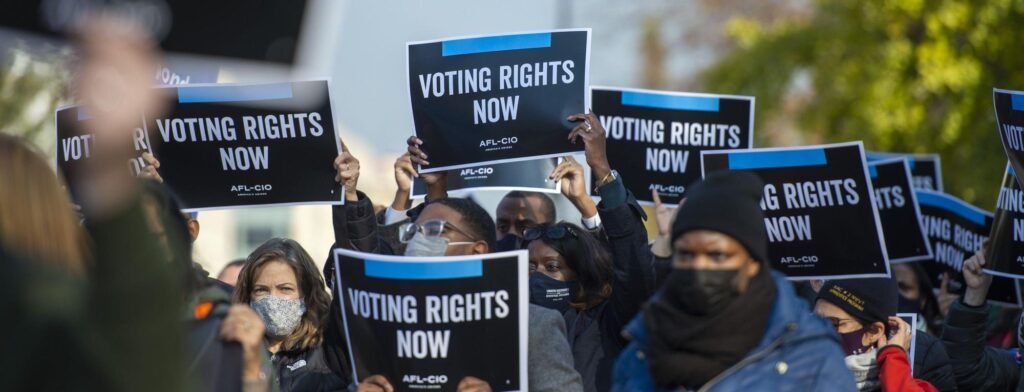
The American public is sharply divided over these developments. Recent polling from February 2026 shows that while many Republicans support “election integrity” measures, there is significant disapproval of the President’s handling of the economy and immigration. This has led to a “Blue Wave” sentiment similar to 2018, where Democrats hope to capitalize on voter anxiety. However, the controversy surrounding election rules could make a traditional “wave” difficult to achieve if voting methods are significantly altered in swing districts.
Voter Sentiment in Swing States
In states like Georgia, Michigan, and Wisconsin, the rhetoric from Washington is having a polarizing effect. While some voters believe the administration is finally “cleaning up the system,” others are terrified that their votes won’t be counted. Approval ratings for Donald Trump have hovered around 41%, with deep disapproval among young and nonwhite voters. Democrats are focusing their campaign on “voter protection,” hoping to mobilize these groups by highlighting the potential for disenfranchisement under the MEGA Act and related executive actions.
The Risk of a Government Shutdown
The US election controversy Trump Democrats could also lead to a total standstill in Washington. Republicans have attempted to attach election reform language to essential funding bills, leading to threats of a government shutdown from Democrats. If a compromise isn’t reached, the federal government could face a prolonged closure in early 2026, further complicating the administration’s ability to function while it pursues its election agenda. This “brinkmanship” is typical of the current political era but carries higher risks as the election clock ticks down.
Conclusion: A Democracy at a Crossroads
The US election controversy Trump Democrats represents a pivotal moment in American history. As the Trump administration pushes to centralize election authority and Democrats fight to maintain the status quo of state-run voting, the very foundation of the US Constitution is being tested. Whether through the MEGA Act, DOJ lawsuits, or the potential deployment of federal agents, the landscape of the 2026 midterms has been irrevocably altered.
The coming months will likely see a flurry of court rulings and legislative showdowns that will determine how—and if—millions of Americans can cast their ballots. For now, the nation remains on edge, watching as the two parties grapple for control over the most fundamental aspect of a republic: the right to vote. The resolution of this conflict will not only decide the makeup of the next Congress but will also set the precedent for federal-state relations for decades to come.
Frequently Asked Questions (FAQs)
What is the main cause of the US election controversy between Trump and Democrats in 2026?
The controversy is driven by President Donald Trump’s proposal to “nationalize” or federalize election oversight, particularly in Democratic-led cities. This includes a push for the MEGA Act, which would mandate strict voter ID and citizenship proof, and DOJ lawsuits seeking access to state voter data.
What is the MEGA Act?
The Make Elections Great Again (MEGA) Act is a Republican-sponsored bill that seeks to establish federal standards for elections. Key features include banning universal vote-by-mail, requiring documentary proof of citizenship for registration, and prohibiting ranked-choice voting.
Can the President legally take over state elections?
Under Article I, Section 4 of the US Constitution, states have the primary power to run elections. While Congress can pass certain regulations, a total federal “takeover” of state administration is widely considered unconstitutional by legal experts and has been challenged in court.
Why is the DOJ suing Democratic-led states over voter lists?
The Department of Justice, under the Trump administration, claims it needs detailed voter data (including Social Security numbers) to ensure voter rolls are accurate and free of non-citizens. Democrats argue this is a privacy violation and a tool for voter intimidation.
What role does the FBI play in the 2026 election controversy?
The FBI recently raided an election office in Fulton County, Georgia, to seize ballots and records from the 2020 election. This move has been criticized by Democrats as an abuse of federal power intended to cast doubt on future election results.
How are Democrats preparing for the 2026 midterms amidst this controversy?
Democrats are launching “voter protection” campaigns, filing numerous lawsuits to block federal executive orders, and threatening to withhold funding for agencies like ICE to prevent their deployment at polling stations.