The music world is still reeling from the 68th Annual Grammy Awards, but it isn’t just the historic wins making headlines. On February 1, 2026, the Billie Eilish Grammy Awards 2026 controversy ignited a firestorm of cultural and political debate that has since dominated social media and cable news alike. What began as a celebratory night for the 24-year-old superstar quickly transformed into a polarizing moment of celebrity activism. After securing the prestigious Song of the Year trophy for her haunting ballad “Wildflower,” Eilish bypassed the traditional “thank you” script to deliver a blistering critique of U.S. immigration policy and land history.
The speech, delivered to a star-studded audience at the Crypto.com Arena in Los Angeles, centered on a phrase that has since gone viral: “No one is illegal on stolen land.” This statement, combined with a blunt condemnation of Immigration and Customs Enforcement (ICE), has divided the public into two fierce camps. Supporters view her as a courageous voice for the marginalized, while critics label the move as performative activism. As the dust settles, the industry is left questioning the role of artists in political discourse and whether Eilish’s “stolen land” rhetoric matches her own lifestyle as a multi-millionaire property owner in Southern California.
Billie Eilish: Quick Profile & Biography
| Full Name | Billie Eilish Pirate Baird O’Connell |
| Date of Birth | December 18, 2001 |
| Birthplace | Los Angeles, California, U.S. |
| Age (as of 2026) | 24 Years Old |
| Parents | Maggie Baird (Actress/Musician) and Patrick O’Connell (Actor) |
| Siblings | Finneas O’Connell (Brother, Producer, and Collaborator) |
| Height | 5’3″ (161 cm) |
| Debut Single | “Ocean Eyes” (Released November 2015 on SoundCloud) |
| Debut Studio Album | When We All Fall Asleep, Where Do We Go? (2019) |
| Studio Discography | 1. When We All Fall Asleep, Where Do We Go? (2019) 2. Happier Than Ever (2021) 3. Hit Me Hard and Soft (2024) 4. Echoes in Silence (Slated for late 2026) |
| Major Awards | 10 Grammy Awards (including 3-time Song of the Year winner) 2 Academy Awards (Oscars) for Best Original Song 2 Golden Globe Awards |
| Activism Focus | Climate Change, Immigration Rights (ICE Opposition), Body Positivity |
| Signature Musical Style | Ethereal vocals, Dark pop, Alternative, Avant-pop |
| Historical Milestone | Youngest person and first female to sweep the “Big Four” Grammy categories in one night (2020) |
The Historic Win for “Wildflower”
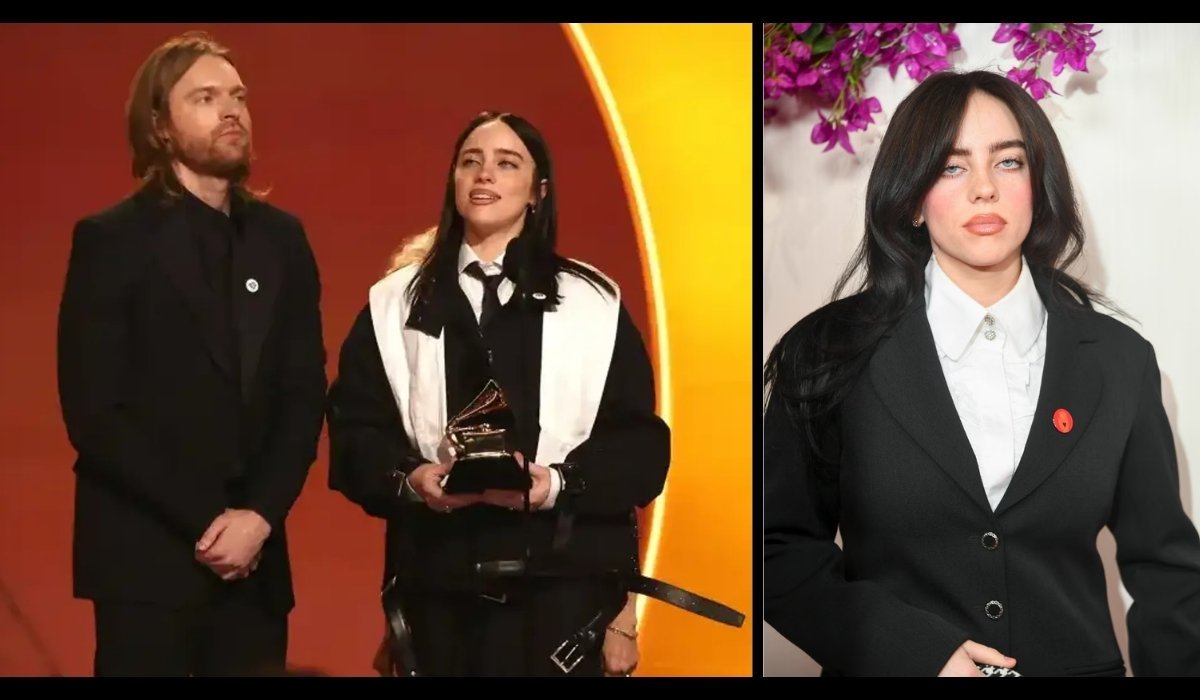
Before the controversy took center stage, the night was a massive professional milestone for the Eilish family. Billie Eilish and her brother, Finneas O’Connell, made history by winning Song of the Year for “Wildflower,” a standout track from her 2024 album, Hit Me Hard and Soft. This win marked Eilish’s third time taking home this specific honor, following her previous successes with “Bad Guy” and “What Was I Made For?”. The award was presented by the legendary Carole King, adding a layer of prestige to the moment that few expected would turn so political so quickly.
“Wildflower” had already been a commercial juggernaut, peaking at No. 17 on the Billboard Hot 100, but its Grammy victory solidified its status as a defining song of the mid-2020s. As Billie and Finneas walked toward the podium, the atmosphere was one of universal acclaim. However, the mood shifted almost instantly. Both siblings were spotted wearing “ICE Out” pins on their formal attire, a subtle precursor to the verbal bombshell Billie was about to drop. For those watching closely, it was clear that Eilish had more on her mind than just industry accolades.
Dissecting the Billie Eilish Grammy Awards 2026 Controversy Speech
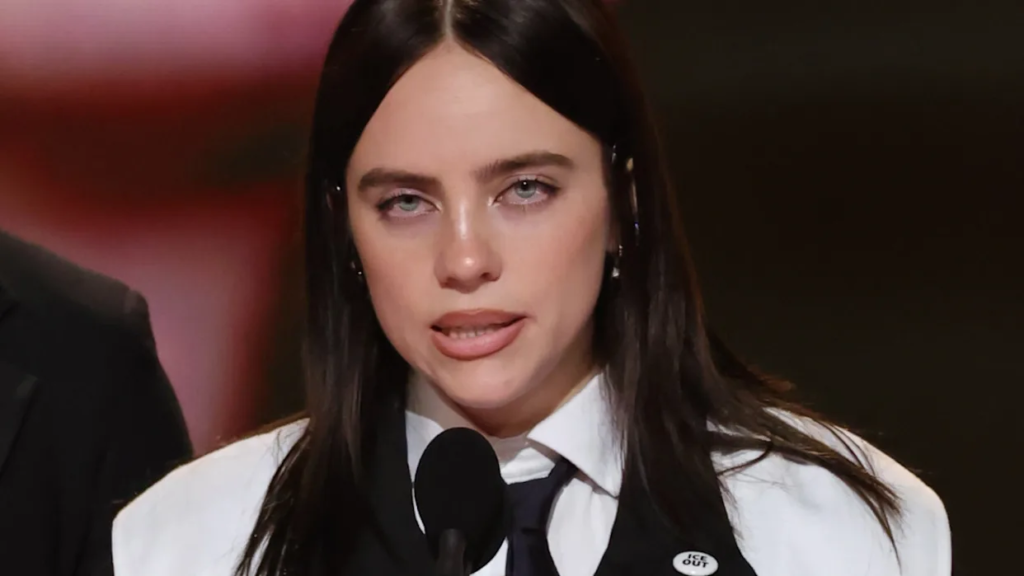
When Billie reached the microphone, she didn’t lead with the usual list of managers and label executives. Instead, she took a deep breath and addressed the current socio-political climate. “As grateful as I feel, I honestly don’t feel like I need to say anything but that: No one is illegal on stolen land,” she told the crowd. The statement was a direct nod to Indigenous rights and a rebuke of the ongoing mass deportation rhetoric prevalent in 2026. She continued by expressing her hope for the future but emphasized the need for active protest.
The most shocking moment for many viewers came at the end of her remarks. After urging the audience to “keep fighting and speaking up,” Eilish ended her speech with a blunt “F–k ICE.” While the final words were censored for the live television broadcast on CBS, the unedited version immediately leaked online via social media clips. The audience in the arena responded with a standing ovation, but the reaction outside those walls was significantly more complicated. Within minutes, the Billie Eilish Grammy Awards 2026 controversy was the top trending topic globally, sparking a massive digital divide.
The “Stolen Land” Backlash and Real Estate Irony
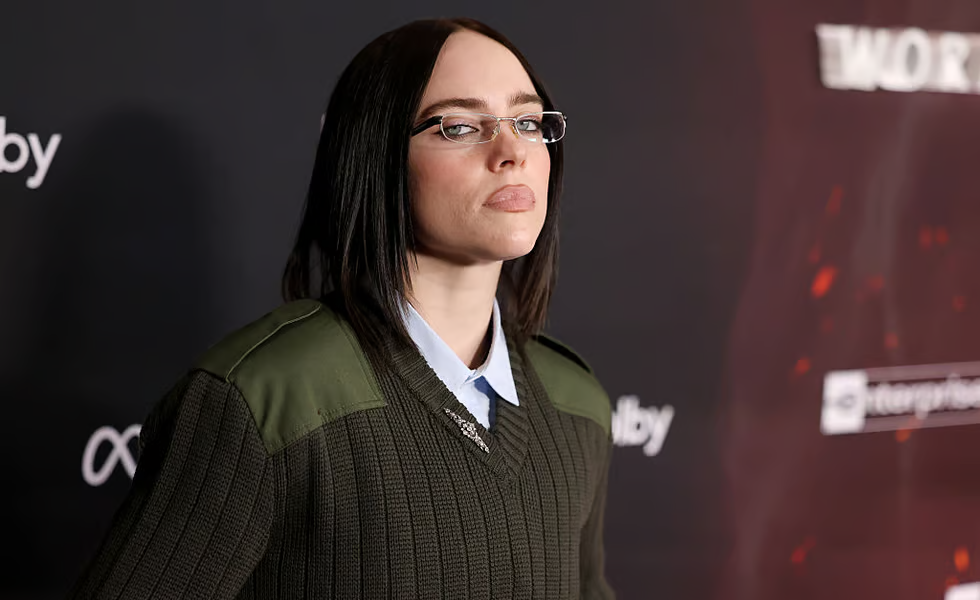
The primary criticism leveled against Eilish involves the perceived gap between her political rhetoric and her personal wealth. Following her “stolen land” comment, conservative commentators and internet sleuths were quick to point out that Eilish resides in a $14 million mansion in Los Angeles. Critics argue that if the land is truly “stolen,” the singer should lead by example and return her property to the original inhabitants. This argument gained significant traction on platforms like X (formerly Twitter), where users accused her of “empty virtue signaling” from the safety of a gated community.
The irony of a celebrity advocating for the abolishment of borders while living on multi-million dollar real estate became the focal point of the Billie Eilish Grammy Awards 2026 controversy. One viral post from a satirical law firm even offered to help the local Tongva tribe evict Eilish on a pro bono basis. While the offer was a joke, it highlighted a very real frustration among those who feel that Hollywood elites are disconnected from the consequences of the policies they champion. For many, Eilish’s speech felt like a lecture from a position of extreme privilege.
Response from the Tongva Tribe
In the days following the Grammys, the Tongva tribe (the Gabrielino people), who are the traditional caretakers of the Los Angeles Basin, issued a diplomatic response to the singer’s comments. A spokesperson for the tribe noted that while they appreciate public figures bringing visibility to the history of the land, Eilish had not actually contacted them regarding her property. They emphasized that “stolen land” is not just a catchy slogan for an award show, but a lived reality that requires more than just a shout-out on a global stage.
The tribe’s response added a layer of nuance to the Billie Eilish Grammy Awards 2026 controversy. They expressed hope that in the future, artists would explicitly name the tribes whose land they occupy to ensure the public understands the specific history of the territory. This gentle nudge suggested that while Eilish’s heart might be in the right place, her activism lacked the depth of direct engagement with the communities she was referencing. It turned the conversation from a simple “celebrity vs. critic” battle into a deeper discussion about the ethics of land ownership in America.
Political Figures Weigh In
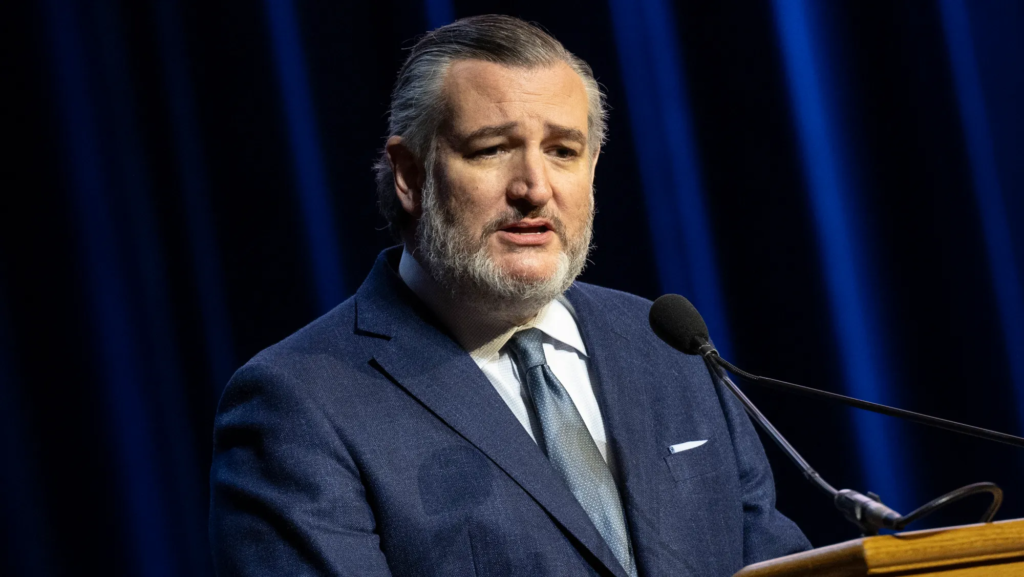
It didn’t take long for professional politicians to enter the fray. High-profile conservative figures, including Senator Ted Cruz, condemned the speech, suggesting that celebrities should “stick to singing” and avoid alienating half of their audience. On the other side of the aisle, progressive voices praised Eilish for using her massive platform to speak truth to power. This political tug-of-war ensured that the Billie Eilish Grammy Awards 2026 controversy remained in the news cycle for over a week, transcending the entertainment pages and hitting the front pages of major newspapers.
The timing of the speech was particularly sensitive. With the Trump administration ramping up immigration enforcement in early 2026, Eilish’s comments were seen as a direct challenge to federal authority. This made the controversy more than just a pop culture moment; it became a symbol of the broader resistance movement. For many young fans, Eilish’s willingness to risk her reputation for her beliefs was a sign of authentic leadership, while for her detractors, it was an example of the “woke” industry losing touch with middle America.
Kevin O’Leary and the Financial Perspective
One of the most vocal critics from the business world was “Shark Tank” star Kevin O’Leary. In a televised interview, O’Leary slammed the singer, arguing that political statements of this nature are “bad for business.” He suggested that by taking such a hardline stance, Eilish was effectively telling a significant portion of her customer base that their values didn’t matter. O’Leary’s critique focused on the brand damage that can occur when a global icon becomes a partisan figure, sparking a debate about whether artists have a “fiduciary responsibility” to their careers.
This financial angle added another dimension to the Billie Eilish Grammy Awards 2026 controversy. Is an artist’s primary job to entertain, or are they duty-bound to use their influence for social change? O’Leary argued that Eilish’s comments would ultimately hurt her longevity and ticket sales in “red states.” However, supporters pointed out that Eilish has always been an unconventional star whose brand is built on authenticity and rebellion, meaning her political outbursts might actually strengthen her bond with her core demographic.
Mark Ruffalo and the Celebrity Defense
The backlash against O’Leary was swift, led by fellow activist and actor Mark Ruffalo. Defending Eilish on social media, Ruffalo told O’Leary to “STFU,” praising the singer for having the “guts” to say what many in the industry were thinking. Ruffalo’s intervention highlighted the solidarity among progressive Hollywood stars who feel that their platforms are exactly where these conversations should be happening. The public spat between the actor and the businessman further amplified the Billie Eilish Grammy Awards 2026 controversy, turning it into a proxy war between different ideologies.
Ruffalo’s defense focused on the idea that silence is a form of complicity. He argued that Eilish, as a 24-year-old woman, has more to lose than most by speaking out, making her actions even more commendable. This “celebrity feud” kept the story alive on platforms like TikTok and Instagram, where younger audiences heavily favored Eilish and Ruffalo’s stance. The controversy became a litmus test for how fans view the intersection of fame and social responsibility in the modern era.
Finneas O’Connell’s Sharp Rejoinder
Not one to let his sister face the heat alone, Finneas took to Instagram Threads to fire back at the critics. He pointed out the demographic of the loudest detractors, noting that it was mostly “powerful old white men” who seemed outraged by a young woman’s opinion. In a particularly sharp move, he even referenced the infamous “Epstein files,” suggesting that those criticizing his sister’s morality should look closer at their own circles. This aggressive defense was typical of the protective bond the siblings share.
Finneas’ comments shifted the narrative of the Billie Eilish Grammy Awards 2026 controversy toward a generational conflict. By framing the backlash as an attack from an “out-of-touch” establishment, he helped galvanize Gen Z support for Billie. His response emphasized that the Eilish team wasn’t interested in playing it safe or apologizing for their views. This “us vs. them” mentality has become a hallmark of the Eilish brand, further cementing her status as a counter-culture icon in the mainstream.
Comparison to Other Artists that Night
Billie Eilish wasn’t the only artist to get political during the 68th Grammys, though hers was the loudest voice. Bad Bunny, who won Album of the Year, also utilized his platform to speak out against ICE, stating, “We are humans and we are Americans.” Similarly, Best New Artist winner Olivia Dean paid tribute to her immigrant roots, calling herself a “product of bravery.” Several other performers wore the “ICE Out” pins, suggesting a coordinated effort by the Recording Academy’s biggest stars to send a message.
However, the reason the Billie Eilish Grammy Awards 2026 controversy stood out was the specific “stolen land” rhetoric. While others focused on human rights and personal heritage, Eilish’s comments questioned the very legitimacy of the ground they were standing on. This was seen as a more radical and provocative stance than a general call for compassion. By pushing the conversation toward the history of colonization, Eilish moved beyond standard “liberal Hollywood” talking points into territory that many found much more challenging to swallow.
The Long-Term Impact on Billie Eilish’s Career
Industry analysts are now debating whether this controversy will have a lasting impact on Eilish’s career. Historically, artists like The Chicks (formerly the Dixie Chicks) faced massive blacklisting for political comments, but the landscape in 2026 is vastly different. In the age of streaming and direct-to-fan engagement, a “controversial” artist can often thrive by leaning into their niche. Early data suggests that “Wildflower” actually saw a spike in streams following the Grammy speech, as curious listeners flocked to the song that started it all.
Still, the Billie Eilish Grammy Awards 2026 controversy could affect her relationship with certain corporate sponsors or festivals in more conservative regions. The “F–k ICE” comment, in particular, is a difficult hurdle for brands that prefer to remain apolitical. For Billie, however, the risk seems calculated. She has spent her entire career defying expectations and speaking her mind, and this latest chapter is simply a more mature—and more aggressive—extension of the girl who once told her fans to “wear what you want” and “be who you are.”
Conclusion: A Turning Point for Music and Politics
The Billie Eilish Grammy Awards 2026 controversy is more than just a fleeting tabloid story; it is a significant marker of where the culture stands in 2026. It reflects a world where the boundaries between art and activism have almost entirely dissolved. Whether you see her as a hypocritical elitist or a fearless revolutionary, Eilish has succeeded in starting a conversation that extends far beyond the production value of a pop song. She used her “Song of the Year” win to remind the world that even in moments of high glamour, the “real world” and its injustices are never far away.
As the music industry looks ahead to the rest of the year, the “Eilish Effect” will likely embolden other artists to speak up. The controversy has proven that while the backlash can be intense, the support from a loyal, younger demographic is equally powerful. Billie Eilish remains one of the most influential figures of her generation, and if her Grammy speech taught us anything, it’s that she isn’t afraid to use that influence—even if it means burning a few bridges along the way.
Frequently Asked Questions (FAQs)
1. What exactly did Billie Eilish say at the 2026 Grammys?
During her acceptance speech for Song of the Year, Billie Eilish stated, “No one is illegal on stolen land,” and concluded her remarks with a vocal condemnation of ICE, saying “F–k ICE.” She also urged people to continue protesting and fighting for immigrant rights.
2. Why is there a controversy about her mansion?
Critics pointed out the hypocrisy of Eilish claiming the land is “stolen” while she lives in a $14 million Los Angeles mansion located on ancestral Tongva tribe land. Many argued that if she truly believed her rhetoric, she should return the property or house migrants there.
3. Did the Tongva tribe respond to Billie Eilish?
Yes, a spokesperson for the Tongva tribe acknowledged the visibility she gave to the issue but noted that she had not contacted them directly. They encouraged her and other celebrities to be more explicit in naming the specific tribes whose land they occupy.
4. Who defended Billie Eilish during the backlash?
Several high-profile figures defended her, most notably her brother Finneas and actor Mark Ruffalo. Ruffalo specifically clashed with businessman Kevin O’Leary, who had criticized the speech as being bad for Eilish’s professional brand.
5. How many Grammys did Billie Eilish win in 2026?
Billie Eilish won Song of the Year for “Wildflower” at the 68th Annual Grammy Awards. This was her third win in that specific category throughout her career, further cementing her status as a Recording Academy favorite.
6. Is “Wildflower” about the controversy?
No, “Wildflower” was released in May 2024 as part of the Hit Me Hard and Soft album. The song itself is a personal, emotional ballad. The controversy is strictly related to the speech she gave while accepting the award for the song, not the lyrics of the track itself.